Finding the Dead Zones: How Street-Level Tracking Reveals Where You Are Losing Leads
By Shahid Anwar – Local SEO & Google Business Profile Expert
I. The “Office Bubble” Illusion
Imagine this: You are a plumber sitting in your home office or storefront. You open your phone, type “plumber near me” into Google, and there you are – Number 1 in the Map Pack. You lean back, satisfied, assuming that every homeowner in the city sees the same thing. You believe your google business profile seo is firing on all cylinders. But then, the phone doesn’t ring. The leads don’t come. You begin to wonder if local search is a dying medium.
Welcome to the “Office Bubble.” This is a psychological trap that costs local businesses thousands of dollars in lost revenue every month. The reality of modern search is defined by the “Proximity Paradox.” Because proximity is a top 3 ranking factor in Google’s local algorithm, your visibility is often highest exactly where you are standing. As you move just two blocks away, or across a major highway, your ranking can plummet from #1 to #15 in the blink of an eye. Google’s algorithm effectively shrinks your visibility radius to keep results hyper-relevant to the user’s precise latitude and longitude.
If you aren’t tracking your rankings at the street level, you are flying blind. You might be dominating your parking lot while losing the entire neighborhood across the street. To fix a quiet phone line, you must first understand the ground truth of your data. Before we dive into the technical fixes, I recommend starting with The Simple Map Audit Checklist to Diagnose a Quiet Phone Line to see where your baseline currently sits.
II. What Are “Dead Zones” in Local Search?
In the world of local map pack seo, a “Dead Zone” is a specific geographic area within your target service territory where your Google Business Profile (GBP) fails to appear in the Top 3 results. In local search, the Top 3 – known as the Map Pack – is the only place that matters. Statistics show that the vast majority of clicks and calls go to these three businesses. If you are #4, you might as well be on page ten.
A Dead Zone isn’t just a lack of ranking; it’s a hole in your digital net. You might be ranking perfectly in the North side of town, but because of a competitor’s location or a lack of localized signals, you have a total blackout in the South side. Traditional rank trackers that give you a single “average” ranking for a city are useless here. They hide these Dead Zones by averaging your #1 rank at the office with your #20 rank in the suburbs, giving you a misleading “Average Rank: 10.”
To visualize these gaps, we use a concept called “GeoGrids.” A GeoGrid overlays a map of your city with a series of data points (nodes). Each node shows exactly where you rank at that specific spot. By using a high-quality google maps rank tracker, you can see a heat map of your visibility. Green pins mean you are in the Top 3; red pins mean you are in a Dead Zone. Identifying these red spots is the first step toward total market dominance.
III. Why Traditional Google Business Profile SEO Fails the Proximity Test
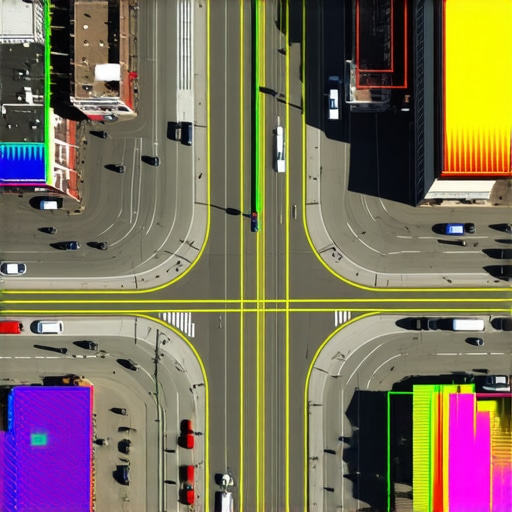
For years, SEOs focused on keywords and backlinks. While those still matter, the “Science of Street-Level Tracking” has revealed that Google’s local algorithm is far more granular than most realize. Your gmb seo tools must be able to account for micro-proximity. We have seen cases where a business ranks #1 on one side of a major intersection and #10 on the other side simply because Google perceives the intersection as a neighborhood boundary.
Street-level tracking reveals that your “authority” has physical borders. These borders are defined by physical landmarks, competitor density, and even the way people move through a city. If you rely on old-school tracking, you’ll never see these boundaries. You’ll keep optimizing your website for the whole city, while the real battle is being lost block by block. This is why understanding Why Neighborhood Context is the Future of Local Search Rankings is critical for any business owner who wants to scale.
By utilizing advanced google maps seo tools, we can pinpoint exactly where your authority drops off. Is it because of a river? A highway? A cluster of five competitors in a single office building? Once you see the “edge” of your ranking radius, you can begin the work of pushing that edge further out into the lucrative areas where your customers actually live.
IV. The Service Area Trap: Why Proximity is the Ultimate “Lead Killer”
One of the most common mistakes I see as a google business profile optimization expert is the “Service Area” trap. Many service-based businesses (like HVAC or locksmiths) set their service area in the GBP dashboard to cover a 50-mile radius. They believe this tells Google, “I want to rank everywhere in this circle.”
Google doesn’t care what you say your service area is; it cares where you are physically located and where your digital signals are strongest. You can set a 50-mile radius, but if your signals only support a 2-mile radius, you will have a massive Dead Zone covering 48 miles of your territory. This mismatch between your expectations and Google’s reality is a lead killer. You are essentially invisible to 90% of your target market.
This is often compounded by The Service Area Error That Makes Your Business Invisible on Local Maps, where businesses fail to provide enough localized proof to justify ranking far from their verified address. To expand your reach, you must stop treating your service area as a setting and start treating it as a territory that must be conquered through localized content and reviews.
V. Case Study: Turning Red Pins Green
Let’s look at a real-world scenario. We worked with a plumber who was located in a mid-sized city. His office was in an industrial district, where he ranked #1. However, the “money” was in a wealthy suburb just four miles to the West. When we ran a report using a google business profile audit tool, the results were shocking. He was “Green” (Top 3) in the industrial area but “Red” (Rank #12+) across the entire wealthy suburb.
He was getting views – about 10,000 a month – but his phone wasn’t ringing. Why? Because the people seeing him in the industrial area were other businesses, not the homeowners he needed. We’ve detailed this phenomenon in our guide on How We Fixed a Map Profile That Had 10k Views and 0 Phone Leads.
By identifying the specific “Dead Zones” in that wealthy suburb, we implemented a strategy of hyperlocal content and geo-specific review acquisition. Within three months, those red pins turned green. The result? His call volume increased by 28% without spending an extra dime on ads. Fixing a single Dead Zone in a high-traffic or high-value area is often more effective than trying to “rank for everything” across the entire state.
VI. 3 Steps to Eliminate Your Dead Zones and Rank Higher on Google Maps
If you want to rank higher on google maps, you need a systematic approach to reclaiming your territory. You cannot guess your way to the top. Here is the framework we use to turn a failing profile into a lead-generation machine.
Step 1: The Street-Level Audit
You cannot fix what you cannot see. Use local seo ranking tools to run a 13×13 or 15×15 GeoGrid around your location. Look for the “Red Zones.” Are they concentrated in one direction? Do they start exactly at a specific neighborhood border? This audit provides the roadmap for your entire gmb ranking service strategy. If you see your rankings drop off sharply to the East, that is where your next month of marketing effort must go.
Step 2: Hyperlocal Relevance and Review Keywords
Google looks for “Proof of Work” in specific areas. If you want to rank in “Suburb A,” you need reviews from customers in “Suburb A” that actually mention the neighborhood name. We’ve found that specific keywords in reviews act as a ranking trigger. Check out 3 Review Keywords That Triggered More 2026 Map Calls to see how to coach your customers to leave the right kind of feedback. Mentioning landmarks and neighborhood names in your GBP posts is also vital.
Step 3: Signal Boosting through Local Citations
To expand your radius, you need to prove to Google that your business is a pillar of the community beyond your immediate street. This involves building citations on local neighborhood directories, sponsoring local events, and uploading geo-tagged images of your work in those Dead Zones. When Google sees a consistent stream of data (GPS coordinates from photos, neighborhood mentions in reviews, and local backlinks) coming from a specific area, it gains the “confidence” to move your pin into the Top 3 for that zone.
VII. Conclusion: Stop Guessing, Start Dominating
Local SEO is no longer about “ranking for a city.” It is a game of inches, streets, and neighborhoods. If you are only checking your rankings from your office chair, you are seeing a fantasy, not the reality of your market. The “Dead Zones” are where your competitors are stealing your leads, and they will continue to do so until you take a street-level view of your performance.
As I, Shahid Anwar, always tell my clients: Visibility is vanity, but proximity is profit. You don’t need to rank #1 in the entire state; you need to rank #1 in the neighborhoods where your best customers live. Stop settling for an “average” rank and start hunting down your Dead Zones. Use the right tools, follow the data, and get more calls from google maps by claiming the territory that is rightfully yours.
Ready to see your real map? It’s time to audit, optimize, and out-rank the competition.