
The Category Trap: Why Your Business Profile Isn’t Showing Up in Nearby Searches
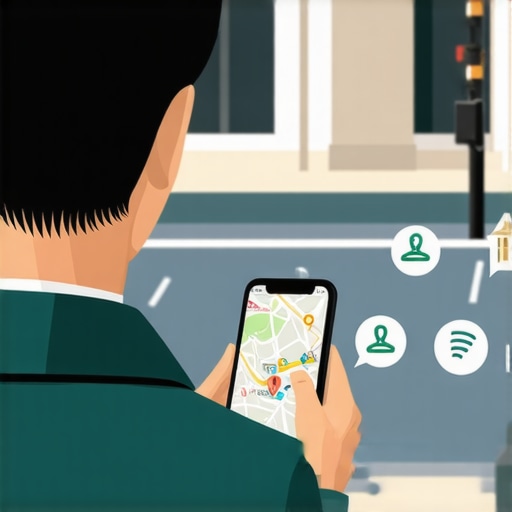
You’ve done everything by the book. You claimed your listing, uploaded high-resolution photos, and even managed to secure a handful of five-star reviews. Yet, when you search for your services from a coffee shop just three blocks away, your business is nowhere to be found. This is the “Ghost Profile” phenomenon – a state where your business is technically verified and “live,” but remains functionally invisible to the very customers standing on your doorstep. If your phone isn’t ringing despite your efforts in google business profile seo, you are likely caught in the “Category Trap.”
According to Google Support, local search results are primarily governed by three pillars: relevance, distance, and popularity. While most business owners obsess over distance (which they can’t control) and popularity (which takes time), they often overlook the most immediate lever: relevance. The Category Trap occurs when a business misaligns its profile with Google’s understanding of relevance, leading to a total blackout in the local map pack. To fix a silent phone line, you must first understand how Google categorizes the world. To begin your recovery, you might need to start with [The Simple Map Audit Checklist to Diagnose a Quiet Phone Line].
The Hidden Hierarchy: Why Your Primary Category is the #1 Ranking Signal
In the world of local search, not all metadata is created equal. While your business description and services are important, your Primary Category is the undisputed heavyweight champion of ranking signals. It is the single most important piece of information you provide to Google’s algorithm. If you get this wrong, no amount of reviews or backlink building will save your rankings. This is the core of effective google business profile optimization.
The “Specificity Rule” is the guiding principle here. Many business owners fall into the trap of choosing a broad category, thinking it will cast a wider net. They choose “Restaurant” instead of “Italian Restaurant,” or “Contractor” instead of “Roofing Contractor.” This is a critical error. Google’s algorithm rewards specificity because it aims to provide the most relevant answer to a user’s specific query. When a user searches for “pizza near me,” Google looks for the “Pizza Restaurant” category first. If you are categorized simply as “Restaurant,” you are competing against every burger joint, sushi bar, and steakhouse in the city, effectively diluting your relevance signal.
Data consistently shows that the primary category is the strongest relevance signal in the local pack. It acts as the “anchor” for your entire profile. When you choose a specific primary category, you are telling Google exactly what “bucket” you belong in. This allows the algorithm to match you with high-intent searches. If you haven’t audited your primary category recently, you may be falling for [The Category Mistake That Lets Competitors Steal Your Map Leads]. To truly dominate, you must ensure your primary category reflects your most profitable and most searched-for service. This strategic alignment is the first step to rank higher on google maps.
Furthermore, Google frequently updates its list of available categories. A category that was optimal two years ago might now have a more specific sub-category available today. Staying on top of these changes is essential for maintaining your competitive edge. If your competitors are using a more precise category than you, they will likely outrank you even if they have fewer reviews and a weaker overall web presence.
The Dilution Effect: When Secondary Categories Kill Your Relevance
If the Primary Category is the anchor, secondary categories are the supporting cast. However, many business owners treat secondary categories like a wish list, adding every possible service they might occasionally perform. This leads to the “Dilution Effect,” a core component of the Category Trap. By trying to be everything to everyone, you end up becoming nothing to the algorithm. This is known as the “Relevance Paradox.”
When you add ten unrelated secondary categories – for example, a “Plumber” who also adds “Handyman,” “Electrician,” “Landscaper,” and “Painter” – you confuse the local algorithm. Google’s goal is to find the most authoritative source for a specific search. When your profile is spread across five different industries, your “authority score” for each individual category is significantly lower than a competitor who focuses solely on one. To manage this effectively, many professionals use local seo tools to see how their category choices impact their proximity reach.
The Dilution Effect is particularly dangerous because it feels productive. It feels like you are opening more doors for customers to find you. In reality, you are closing the main door to the Map Pack. Each additional, unrelated category you add acts as “noise” that interferes with your primary signal. The key is to select secondary categories that are logically related to your primary business. A “Personal Injury Lawyer” might benefit from “Trial Attorney” or “Legal Services,” but adding “Notary Public” might actually hurt their ability to rank for high-value legal searches.
Another common mistake is trying to cover a massive geographic area by selecting categories that aren’t physically supported by your location. This is why [Why Setting a Massive Service Area is Actually Killing Your Local Call Volume] is a must-read for service-based businesses. The algorithm looks for a “tight” relationship between your location, your categories, and the user’s intent. When that relationship is blurred by too many secondary categories, your profile enters a state of relevance “limbo,” where you rank on page 3 for fifty keywords instead of page 1 for the five keywords that actually drive revenue.
Industry-Specific Pitfalls: HVAC, Legal, and Medical Case Studies
The Category Trap manifests differently depending on your industry. In high-competition niches like HVAC, Legal, and Medical, category selection is often the difference between a thriving practice and a failing one. Let’s look at the “Specificity Rule” in action within these sectors. To rank google business profile listings in these areas, you must understand the nuances of niche selection.
The Legal Sector: Consider a law firm that handles car accidents. If they set their primary category to “Lawyer,” they are competing with divorce attorneys, corporate lawyers, and estate planners. By changing their primary category to “Personal Injury Lawyer,” they immediately filter out irrelevant competition. However, if they also add “Criminal Justice Attorney” as a secondary category just because they take one case a year, they risk diluting their “Personal Injury” authority. In the legal world, Google favors specialists over generalists.
The HVAC Industry: For HVAC businesses, the choice between “HVAC Contractor,” “Air Conditioning Repair Service,” and “Heating Contractor” is critical. Often, an HVAC company will set “Air Conditioning Repair Service” as their primary in the summer, then forget to change it or balance it in the winter. This leads to a seasonal ranking drop. Furthermore, proximity plays a massive role here. Data shows that HVAC businesses often disappear from maps once they leave the city center or their immediate zip code if their categories are too broad. This is explored further in [Why Your HVAC Business Disappears From Maps Once You Leave the City Center].
The Medical Field: A “Medical Clinic” is a broad term. A “Pediatrician” or “Dermatologist” is specific. Medical professionals often lose out to competitors because they use their professional title (e.g., “Doctor”) rather than their specialty as the primary category. In these high-trust industries, Google uses category data to verify that the business is a legitimate match for the user’s health concern. If you are an HVAC pro struggling with this, check out [Why Local HVAC Businesses Lose the Map War to Competitors With Fewer Reviews] to see how category alignment trumps review count.
In all these cases, the goal is to align with the user’s search intent. If a user’s furnace breaks, they search for “heating repair,” not “contractor.” If your primary category doesn’t match that intent, you are invisible. This is why google business profile seo requires a deep understanding of industry-specific search behavior and how Google maps those behaviors to its available category list.
Beyond the Label: Mapping Services and Keywords to Your Categories
Once you have selected the perfect primary and secondary categories, your work is only half done. To truly rank higher on google maps, you must create a cohesive ecosystem of relevance. This means your “Services” menu, your business description, and your website content must all sing the same tune as your categories. This is the “infrastructure” of Local SEO that Kevin Pauls often emphasizes.
The “Services” section of your Google Business Profile is a goldmine for relevance. You should populate this section with specific services that fall under your chosen categories. If your category is “Plumber,” your services should include “Drain Cleaning,” “Water Heater Repair,” and “Emergency Plumbing.” These act as “micro-signals” that reinforce your primary category. However, do not treat this as a place for keyword stuffing. Instead, use natural language that describes what you actually do. Using a google maps ranking service can help you identify which services are currently trending in your local area.
Your business description should also support your categories. While the description itself isn’t a direct ranking factor in the same way the category is, it influences click-through rates (CTR) and user engagement, which are ranking signals. A well-written description that mentions your primary services and your local area helps Google confirm that your category choice is honest and accurate. This is [The Hidden GMB Field That Actually Sends Quality Phone Leads to Your Office] – the synergy between your categories and your listed services.
Finally, your website’s on-page SEO must align with your GBP categories. If your primary category is “Dental Clinic,” but your website’s homepage focuses entirely on “Teeth Whitening Products,” Google may detect a disconnect. This lack of “Local Justification” can suppress your rankings. The algorithm looks for “mentions” of your services on your linked website to verify the claims made on your profile. Aligning these two assets is the secret to long-term success in google maps seo.
The 2026 Local Algorithm: Hyperlocal Context and Neighborhood Signals
As we look toward 2026, the local search landscape is shifting from “City-wide” relevance to “Neighborhood Context.” Google is increasingly using AI and visual search to understand the hyper-local environment of a business. This means that simply picking the right category won’t be enough; you will need to prove your relevance through engagement and neighborhood-specific signals. This is the next frontier of local seo software development.
Visual search is becoming a major player. Google’s “Multisearch” and AI-driven image recognition can now “see” what is in your business photos. If your category is “Bakery,” but your photos only show office desks and computers, the algorithm will notice the discrepancy. In 2026, your photos will act as secondary category verifiers. High-quality, geo-tagged photos of your actual work, products, and location will be essential for maintaining relevance. This is why [Why Neighborhood Context is the Future of Local Search Rankings] is becoming the new playbook for savvy marketers.
Furthermore, engagement signals – such as how many people click “Call,” how many ask for directions, and how long they spend looking at your photos – will carry more weight. Google wants to see that when they show your business for a specific category, users are satisfied with the result. This creates a feedback loop: the more relevant your category, the higher your engagement; the higher your engagement, the more Google trusts your relevance. Google maps seo in the future will be less about “tricking” an algorithm and more about providing a perfect user experience that matches the chosen category.
We are also seeing the rise of “Entity-Based SEO.” Google is moving away from simple keyword matching and toward understanding “Entities” (People, Places, Things). Your business is an entity, and its relationship to other local entities (like nearby landmarks, local events, and neighborhood associations) will influence your ranking. Choosing the right category is the first step in defining your entity’s identity in the Google Knowledge Graph.
How to Audit and Fix Your Category Strategy (Step-by-Step)
If you suspect you are in the Category Trap, it’s time for a surgical audit. You don’t need to guess; you can use data to reclaim your position in the Map Pack. Follow this step-by-step guide to optimize your profile using a google business profile audit tool.
- Step 1: Competitor Intelligence. Identify the top 3 businesses ranking in the Map Pack for your most valuable keyword. Use a tool or a “view source” trick on Google Maps to see their Primary Category. If all three are using a different primary category than you, that is your “smoking gun.” You must align with what Google is already rewarding.
- Step 2: Primary Category Alignment. Change your primary category to the most specific, relevant option available. Remember the “Specificity Rule.” If you are a specialized contractor, don’t use a general category. This is the fastest way to rank higher on google maps.
- Step 3: Prune Your Secondary Categories. Remove any secondary categories that are not directly related to your primary business. If you haven’t performed that service in the last 90 days, it shouldn’t be on your profile. Aim for 2-4 highly relevant secondary categories rather than 10 mediocre ones.
- Step 4: Audit Your Services Menu. Ensure every service listed in your GBP dashboard is a sub-service of your primary or secondary categories. Use the same terminology that your customers use in their search queries.
- Step 5: Review Your Website. Make sure your website’s H1 tags and meta descriptions mirror your GBP’s primary category. If you want to see how the pros do it, read [What We Learned Auditing 10 Competitors Who Consistently Own the Map Pack].
By following this process, you remove the “noise” that prevents Google from understanding your business. You move from being a “Ghost Profile” to being a high-relevance entity that Google feels confident recommending to its users. This is the foundation of local search optimization.
Conclusion: Escaping the Trap for Maximum Call Volume
The Category Trap is a silent killer of local businesses, but it is entirely avoidable. By mastering the hierarchy of categories, respecting the specificity rule, and avoiding the dilution of your relevance, you can transform your Google Business Profile into a lead-generation machine. Remember, categories are not just labels; they are the very foundation of your local search optimization strategy. In an increasingly competitive landscape, being “close” isn’t enough – you must be “relevant.”
If your profile is still struggling to gain traction, it’s time to stop guessing. Audit your categories today, align your services, and prepare your business for the neighborhood-centric future of 2026. If you need expert guidance to navigate these complex algorithm shifts, consider hiring a google business profile expert to ensure your infrastructure is built for growth, not just existence. Don’t let your business stay a ghost – claim your place at the top of the map pack today.
Author: Kevin Pauls – Local SEO Consultant | Google Business Profile Product Expert