
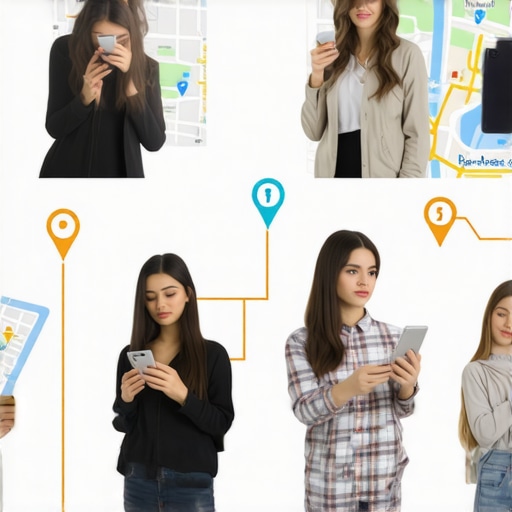
Local SEO Trends 2026: Navigating the Proximity-First Search Logic
The local search landscape has undergone a seismic shift. If you are still operating on the SEO playbooks of 2023 or 2024, your business is likely invisible to a significant portion of your target market. As we navigate 2026, the traditional pillars of search engine optimization – once dominated by backlink quantity and keyword density – have been dismantled in favor of a “Proximity-First” logic. Google’s algorithm now prioritizes physical distance and “neighborhood context” with a level of granularity we haven’t seen before.
I’m Sandeep Nandal, and after 12 years of specializing in google business profile seo and map pack dominance, I’ve witnessed dozens of updates. However, the shift toward hyper-local proximity is the most disruptive change in a decade. We are no longer ranking for cities; we are ranking for street corners. In this guide, I will break down the mechanics of the 2026 algorithm and show you how to maintain visibility when the “proximity fence” keeps getting tighter.
The Death of Broad SEO: Why Hyper-Local Proximity Wins in 2026
For years, a business in the suburbs could rank in the heart of a major metropolitan area through sheer domain authority. That era is officially over. In 2026, the google map pack ranking factors have been recalibrated to solve for “user convenience” above all else. Google has realized that a user searching for a “coffee shop” or an “emergency plumber” doesn’t want the best business five miles away; they want the best business five minutes away.
The algorithm now utilizes a proximity relevance prominence model that penalizes “authority giants” who lack a physical footprint near the searcher. Data indicates that proximity has become the #1 ranking factor, often outweighing a high review count. A business with 50 reviews located 500 feet from the user will now frequently outrank a business with 2,000 reviews located two miles away. This shift necessitates a move away from city-wide targeting toward neighborhood-level optimization.
To succeed, you must understand Why Neighborhood Context is the Future of Local Search Rankings. If your digital presence doesn’t scream “I am part of this specific street,” the algorithm will bypass you for a closer competitor. To stay ahead, businesses are increasingly turning to a google maps ranking service to visualize these invisible proximity boundaries and adjust their strategy accordingly.
Introducing the FACTS Framework: The New Local Algorithm
The 2026 local search ecosystem is governed by what SOCi research identifies as the FACTS framework. This isn’t just a guideline for Google; it’s the logic used by AI agents like Claude, ChatGPT, and Google’s own Gemini to recommend local businesses to users. If you want to rank google business profile listings effectively, you must optimize for these five pillars:
- Freshness: This goes beyond regular posting. Google now looks for real-time signals. Are your “Busy Areas” data points active? Are you updating your “In-Stock” inventory or service availability daily?
- Authority: In 2026, authority is measured by local citations from hyper-local sources – think neighborhood associations, local news mentions, and sponsorships of local events rather than generic guest posts.
- Consistency: Your NAP (Name, Address, Phone) must be identical across the “Search Everywhere” ecosystem, including Apple Maps, Bing, and AI discovery engines.
- Trust: This is verified through biometric-level verification of owners and high-resolution, geocoded photos that prove the business exists exactly where it says it does.
- Semantic Relevance: AI doesn’t just look for keywords; it understands the *intent* of your reviews. It knows the difference between a “cheap plumber” and an “emergency pipe repair expert” based on the linguistic patterns in your customer feedback.
Mastering google business profile seo in this environment requires precision. Utilizing google business profile optimization tools is no longer optional; it is a requirement to ensure your FACTS signals are firing correctly across the web.
AI Search & GEO (Generative Engine Optimization) for Local Brands
We have moved past the era of the “ten blue links.” In 2026, local search optimization is synonymous with GEO – Generative Engine Optimization. When a user asks their AI assistant, “Where should I get my brakes fixed in North Scottsdale?” the AI doesn’t provide a list. It provides a recommendation. It synthesizes data from your website, your reviews, and third-party mentions to build a profile of your business’s reliability.
This “Search Everywhere” approach means your google maps seo 2026 strategy must extend to platforms like TikTok and Instagram Reels. Google’s AI now indexes video content to understand the “vibe” and physical layout of a business. If a user can see the interior of your dental office in a viral video, Google assigns a higher “Trust” score to your physical location. You can learn more about this in our deep dive on How 2026 Visual Search Updates Impact Your Local Call Volume.
The Proximity Paradox: How to Rank When You Aren’t the Closest
One of the biggest challenges for modern businesses is the “Proximity Paradox.” How do you capture leads from the other side of town when Google is obsessed with the searcher’s immediate radius? This is a primary concern for Service Area Businesses (SABs) like HVAC contractors or roofers who don’t have a storefront for customers to visit.
The data is sobering: SE Ranking data shows that 15% of top-ranking local pages disappeared after the December 2025 core update specifically because of stricter proximity filtering. If you aren’t the closest option, you must over-perform in “Prominence” and “Engagement” to break through the proximity wall. This involves generating “Direction Requests” from multiple points in the city and ensuring your brand is mentioned in local subreddits and community forums. To overcome these hurdles and rank in the google map pack, you must prove to Google that your business is “worth the drive” or “worth the wait” compared to a closer, less-reputable competitor.
If you find that your visibility drops off a cliff as soon as you move a mile away from your office, you are likely a victim of this proximity tightening. Read our analysis on Why Your HVAC Business Disappears From Maps Once You Leave the City Center for specific recovery tactics.
Engagement Signals: The “New Backlinks” of 2026
In the early days of SEO, backlinks were the currency of the web. In 2026, google business profile engagement is the only currency that matters for local maps. Google tracks every micro-interaction a user has with your listing. These signals are far more influential than a directory citation from a site no one visits.
Critical engagement signals include:
- Photo Dwell Time: How long do users look at your photos? High-quality, original images keep users engaged, signaling to Google that your listing is relevant.
- “Message” Response Time: Google tracks how fast you respond to inquiries through the GBP interface. Slow responses lead to lower rankings.
- Click-Through Rate (CTR) by GPS: Google knows if people in a specific neighborhood are clicking your listing more than your competitor’s. This local seo CTR creates a feedback loop that can expand your proximity radius.
- Call Duration: A 10-second call suggests a wrong number; a 5-minute call suggests a conversion. Google uses this to measure the quality of the lead they sent you.
To increase google business profile visibility, you must treat your listing like a social media profile that requires constant interaction. For more on this, check out our guide on 5 Engagement Signals That Force Google to Show Your Listing to More Searchers.
Industry-Specific Shifts: From Contractors to Med Spas
The 2026 algorithm doesn’t treat all businesses equally. Different “intent categories” trigger different ranking weights within the google maps ranking system.
Contractors and HVAC
For home services, Google prioritizes “Right Now” intent. If your profile indicates you are “Open Now” and have “Emergency Service” attributes checked, you will outrank a higher-rated competitor who is closed. Real-time availability is the king of local seo for contractors. Many struggle with this, which is why we’ve documented Why Most Roofers Fail to Dominate Their Local Map Pack.
Legal and Medical
For YMYL (Your Money, Your Life) industries, the “Trust” and “Authority” pillars of the FACTS framework are weighted more heavily. Local seo for lawyers and local seo for dentists now requires rigorous verification of credentials and a high volume of “first-person experience” reviews. Google’s AI can now detect “generic” reviews versus those that describe a specific medical outcome or legal victory.
Essential Local SEO Tech Stack for 2026
You cannot win a 2026 SEO battle with 2020 tools. To dominate the map pack, you need a tech stack that provides street-level data and automated auditing. Traditional rank trackers that give you a “city-wide” average are useless because your rank changes every three blocks. You need a grid-based tracking system that shows your visibility at specific GPS coordinates.
For those looking to scale their efforts, I recommend exploring high-end local seo tools that offer automated GBP auditing. These platforms allow you to identify “ranking dead zones” and adjust your local content strategy in real-time. Whether you are looking for a specialized gmb seo tool or a comprehensive google maps seo platform, having the right data is the difference between a ringing phone and a silent one. Using a professional google maps ranking service can provide the technical edge needed to outperform competitors who are still guessing at their proximity reach.
Conclusion: The 2026 Local Roadmap
Success in 2026 requires a fundamental mindset shift. You are no longer trying to “rank on Google”; you are trying to be the most relevant, trusted, and convenient solution within a hyper-specific radius. The google business profile seo strategies of the past – keyword stuffing and citation blasting – are relics. Today, you must master the FACTS framework, embrace Generative Engine Optimization, and obsess over engagement signals.
The proximity-first logic is a challenge, but it is also an opportunity for small businesses to reclaim their local territory from national chains. By focusing on neighborhood context and utilizing advanced SEO Viper Tools, you can build a defensive moat around your business that no amount of broad authority can bridge. If your phone isn’t ringing like it used to, it’s time to stop guessing and start auditing. Start by going through The Simple Map Audit Checklist to Diagnose a Quiet Phone Line and see exactly where the proximity-first algorithm is filtering you out.