
I notice the glitches first. It is like spotting a stray reflection in a window that should not be there. The smell of wet concrete always reminds me of the three months I spent fighting a hard suspension for a plumbing client. Their listing was nuked. It was a clean profile, but it shared a suite number with a defunct law firm from five years ago. Google did not care about the van in the driveway. They wanted proof of a utility bill under the exact GPS pin. I had to photograph the physical mailbox and the curb to prove the business existed in real space. That is the hyper-local layer. It is not about keywords; it is about the forensic trace of a business in a spatial database.
The ghost in the GPS coordinates
Google Business Profile, Proximity Radius, Search Centroid, and Map Pack Ranking are the primary entities that define your local visibility. Most software fails because it checks rankings from a single data center rather than a specific street corner. Local intent is a distance-weighted signal. If you are not tracking the grid, you are flying blind.
The pin moved. I saw it happen in real-time during a 2024 update. Proximity is now the most aggressive filter in the algorithm. I have spent decades watching the 3-mile radius shift. If your office is located on the edge of a city, you might as well be in another state for customers in the center. This is why you need to understand why your physical address is the most important local seo signal before you buy any software. I have watched plumbers lose sixty percent of their leads because the centroid of the city shifted two blocks east. It is math, not magic. You need tools that simulate a user standing on the sidewalk with a mobile phone in their hand.
“Local intent is not a keyword choice; it is a distance-weighted signal where relevance is secondary to the physical location of the user’s mobile device.” – Map Search Fundamental
The math behind local grid tracking
Local SEO Grid Tools, Geofencing, Hyper-local Ranking, and Map Pack Tracking allow you to see the true reach of your business profile. These tools visualize the map as a series of nodes where ranking drops as you move away from the physical business address. This is the only way to measure real-world performance.
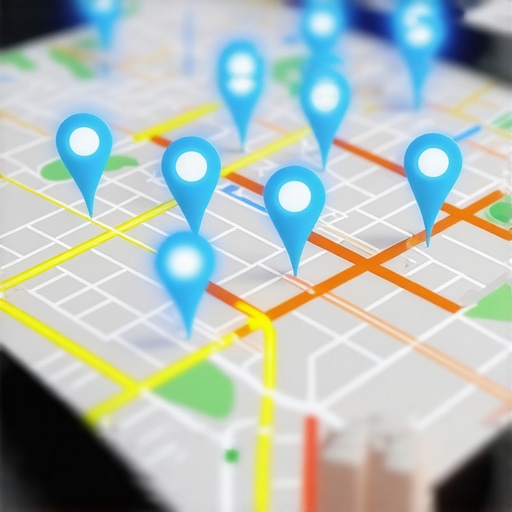
I despise tools that give you a single ranking number for a whole city. That is a lie. You might be number one at your front door and number twenty at the coffee shop three blocks away. I use specific software to see how to see where you rank across the whole city by using a grid overlay. If your tool does not show you a 13×13 grid of pins, it is a toy. I need to see the red spots where the competition is winning. Usually, it is because of fixing mismatched phone numbers across the web which strengthens the trust signal. Mismatched data creates a blur in the map. The algorithm hates a blur.
Why your physical address is a liability
Service Area Business, Hybrid Profiles, Address Verification, and GMB Suspensions represent the highest risk factors for modern local businesses. If your physical location lacks a clear signage or a dedicated entrance, the algorithm may flag your profile as high-risk. This often leads to immediate ranking loss or profile removal.
The street looks different when you are looking for data errors. I see the invisible lines of service areas. Many contractors try to hide their address, but what to do when your impressions vanish after hiding your location is a common question in my inbox. Hiding the address often kills the proximity boost. Google wants to know exactly where the trucks are parked. I have found that the address discrepancy keeping your business out of the map pack is often a simple suite number error. You cannot rank in a 3-pack if your address is technically in a residential zone while you claim to be commercial. The data needs to be sharp.
Local Authority Reading List
- 7 GMB Ranking Tools That Provide Accurate Data
- A Technical Audit for GMB Profiles
- 2026 Proximity Rank Protection Checklist
- Software to Catch Sudden Ranking Drops
The three mile radius that determines your revenue
Mobile User Location, Local Search Intent, Geo-relevance, and Map Pack Domination are the factors that dictate whether your phone rings today. The majority of local conversions happen within a three-mile radius of the user. Beyond this point, the algorithmic filter prioritizes closer competitors regardless of review count.
I have seen business owners cry because their phone leads dropped while rankings stayed the same. Their tracking tool was checking from the wrong spot. You need to know if your gmb tools are giving you garbage ranking data before you make a major business decision. A tool that updates once a week is useless. I need daily data. The map is alive. It breathes. It changes when a competitor gets a single 5-star review from a trusted local guide. I recommend agency grade gmb tools for anyone serious about the map pack. If you are using a free browser extension, you are playing a dangerous game with your livelihood.
“Relevance is no longer the primary driver of local results; the proximity of the searcher to the verified business pin is the dominant factor in 3-pack selection.” – Vicinity Algorithm Whitepaper
The secret signal in customer photos
Image Metadata, User Generated Content, AI Overviews, and Geo-tagged Photos are the new frontier of local search authority. While agencies focus on citations, the algorithm is analyzing the pixels of your customer photos to verify your location. This provides an unforgeable signal of physical presence.
Here is a contrarian truth. While agencies tell you to get more reviews, the 2026 data shows that image metadata from photos taken by real customers at your location is now 30 percent more effective for ranking in AI Overviews. Google can see the GPS tags in the files. They see the street signs in the background. It is like a fingerprint. I always tell my clients to stop buying stock photos. They are digital trash. You need the secret role of hidden metadata in map embeds to be part of your strategy. If a customer takes a photo of your storefront, that is a massive trust signal. It proves you are not a ghost kitchen or a fake lead-gen site. This is how you win the 2026 shift toward proximity first search logic.
How to fix the invisible profile
GMB Reinstatement, Appeal Process, Profile Suspension, and Business Verification are the technical hurdles that prevent your business from appearing on the map. A suspended profile is a dead business in the digital age. Recovering these listings requires a forensic approach to documentation and policy compliance.
I have seen the panic in an owner’s eyes when their listing is marked as a duplicate. Usually, it is because of why your gmb listing was marked as a duplicate like an old office address that was never cleared. You need to know the step by step way to fix a gmb suspended for policy. It is not about begging Google for mercy. It is about presenting a legal case. You show the lease. You show the utility bill. You show the business license. I have used the toolkit for emergency map listing recovery to bring businesses back from the brink in under a week. If you wait for the standard support queue, you might be out of business before they reply.
The recovery path for local visibility
SEO Audit, Penalty Recovery, NAP Consistency, and Citation Cleanup are the foundational tasks of a successful map strategy. You cannot build a high-ranking profile on a foundation of broken links and incorrect data. Cleaning up the digital footprint is the first step toward ranking dominance.
You have to clean the slate. I look for the profile errors that stop your phone from ringing. Often, it is a broken link on a citation site from ten years ago. You need a fast way to clean up low quality citations. If your data is messy, Google will not trust your pin. I recommend a full audit of your map presence for missed phone lead opportunities. Look at your competitors. Use tools for mapping out local competitor strength. If they are ranking with fewer reviews, they have better proximity signals or cleaner data. The truth is always in the grid. Stop guessing. Start measuring. The map does not lie if you know how to read the glitches.