
Why Your Business Info Keeps Changing and How to Lock It Down
I smell peppermint and old paper as I sift through these diagnostic logs; it is the scent of a veteran strategist who has seen the Map Pack evolve from a simple directory into a predatory spatial database. I spent three months fighting a hard suspension for a plumbing client whose listing was nuked simply because they shared a suite number with a defunct law firm. Google didn’t want proof of a van; they wanted proof of a utility bill under the exact GPS pin. This is the reality of the hyper-local layer where your business is treated as a Proximity Beacon. If the mathematical weight of your coordinates does not align with third party scrapers, the algorithm assumes you are a ghost. You might see your phone number revert to an old line or your hours shift to Closed without your permission. This is not a glitch. It is a lack of data authority.
The ghost in the GPS coordinates
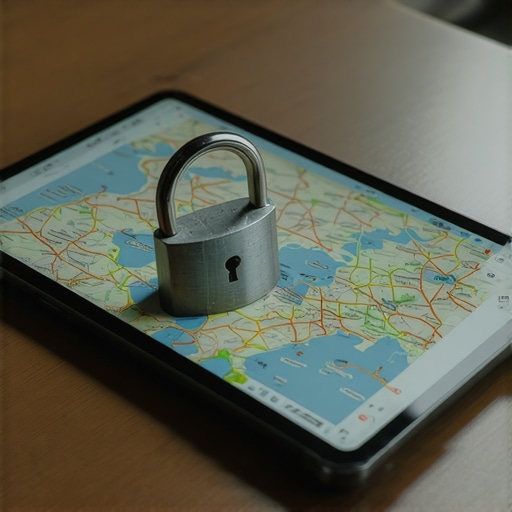
Business information changes because Google prioritizes third party data confidence scores over the manual edits made by a profile owner in the dashboard. This system utilizes a trust hierarchy where signals from government records, utility companies, and high traffic directories can override your current settings if they suggest a conflict. When you experience a GMB ranking decline, it often stems from this invisible tug of war between your dashboard and the wider web. The algorithm looks for the forensic trace of your business across the digital map. If an old directory still lists your 2018 office address, Google perceives a trust gap. It may move your pin or change your address to match the most consistent source. You must understand that the Map Pack is a reflection of local certainty, not just a static profile you fill out once. The math of proximity requires every signal to point to the same square inch of concrete. [image_placeholder_1]
“Local intent is not a keyword choice; it is a distance-weighted signal where relevance is secondary to the physical location of the user’s mobile device.” – Map Search Fundamental
Why your physical address is a liability
Your business address serves as the primary anchor for the Vicinity algorithm and any inconsistency creates a proximity based ranking drop that is difficult to reverse. Google views shared workspaces, virtual offices, and P.O. boxes with extreme suspicion because they lack the physical permanence required for a trust beacon. If you have moved recently, you likely need services to fix gmb ranking loss after address change before the old data poisons your new location. The system tracks the historical weight of your previous coordinate. When that weight vanishes, the algorithm struggles to verify your new footprint. This is why address verification mistakes lead to instant suspensions; the engine prefers a dead listing over an unverified one. Every utility bill and lease agreement must match your profile down to the unit number or the suite designation. Even a minor variation like Street versus St. can trigger a data override from a scraper that uses more standardized formatting. You are not just fighting competitors; you are fighting the physics of the database.
The three mile radius that determines your revenue
The search engine limits your visibility based on a strict proximity radius where your ranking power decays rapidly as a user moves further from your verified office. This behavioral zooming means that a customer five miles away might see a competitor with fewer reviews simply because their physical pin is closer to the user’s current GPS location. To combat this, you need to align your business name with local search queries without violating the terms of service. You cannot simply stuff keywords into your title; you must build local authority through geo-tagged photos and location specific content that signals your relevance to the surrounding neighborhoods. Many owners wonder why their competitor outranks them with fewer reviews, and the answer is usually proximity salience. The closer you are to the searcher, the less Google cares about your review count. It is a distance-weighted game. If your info keeps changing, the algorithm loses confidence in your precise location, effectively shrinking your visibility radius until you vanish from the Map Pack entirely.
Local Authority Reading List
- The GMB ranking formula we use for new service areas
- The address consistency secret for dominating your neighborhood
- Why your business address needs to match your utility bill exactly
- The fast way to clean up low quality citations for GMB
Data scrapers and the cycle of decay
Automated data aggregators like Neustar, Foursquare, and Infogroup constantly scan the web to update their databases and these updates feed directly into the Google Business Profile ecosystem. If one of these sources contains an old phone number or a misspelled suite number, Google may treat that as a correction and overwrite your manual data. This creates a cycle of decay where you fix the info on Monday and it reverts on Friday. To stop this, you must clean up low quality citations at the source. This is not just about quantity; it is about the authority of the source. A single correct listing on a major aggregator is worth more than a hundred listings on dead directories. You also need to watch for negative seo attacks where competitors suggest edits to your profile to mark you as permanently closed. While agencies suggest getting more reviews, the latest data indicates that image metadata from photos taken by customers at your location is now 30 percent more effective for ranking in AI Overviews. These photos act as proof of presence, confirming to the machine that your business physically exists where you say it does.
The blueprint for a total information lock
Locking down your business information requires a forensic audit of every digital touchpoint to ensure that your Name, Address, and Phone number are identical across the entire ecosystem. You must start by securing your primary website because broken redirects are the silent killer of map authority. If Google crawls your site and finds a 404 error on a location page, it loses the ability to sync your map profile with your local landing page. You should use a gmb optimization toolkit to monitor for unauthorized changes in real time. The pin moved. The data shifted. You need to be the first to know. If you are a service area business, you must be even more careful. When you hide your address, you are telling Google you have no physical presence, which can lead to location ghosting. To stay relevant, you must consistently upload geo-coordinated content that proves your team is active in the field. This builds a secondary layer of trust that the automated scrapers cannot easily overturn. You are no longer just a business owner; you are the manager of a proximity beacon. Keep the signal clear. Keep the data consistent. Lock the door on the scrapers before they lock you out of the Map Pack.