
The reinstatement war for local map dominance
I spent three months fighting a hard suspension for a plumbing client whose listing was nuked simply because they shared a suite number with a defunct law firm. Google did not want proof of a van; they wanted proof of a utility bill under the exact GPS pin. This battle taught me that the map pack is not a directory but a physical grid where every inch of shared space creates a data conflict. If your office shares a wall with another entity, the proximity signals blur. I had to record a continuous video starting from the street corner, showing the street sign, walking into the building, and unlocking the specific suite door. This granular evidence is the only language the spam team understands now. When you use GMB ranking toolkits for local SEO, you are often just looking at the surface, but the real work happens in the physical proof of existence.
The three mile radius that determines your revenue
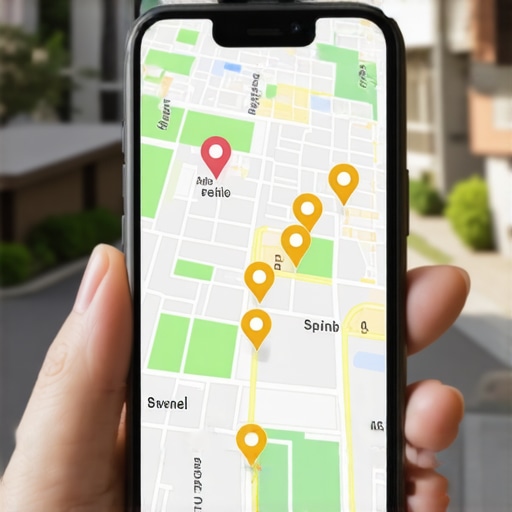
A three mile radius represents the primary proximity threshold where Google Business Profile signals are strongest for mobile users. Beyond this point, the algorithm requires significantly higher relevance and prominence scores to displace closer competitors. Most business owners do not realize that their visibility is a shrinking circle. As more competitors enter the local grid, the ‘proximity pull’ of your business profile weakens. This is why many find that Google filters certain locations out of the search results entirely when they are too close to a stronger entity. The software you use to track these ranks must account for the user’s precise location. If a toolkit only tracks from a single zip code centroid, it is lying to you about your actual reach. Real local tracking requires a grid of coordinate points, measuring how your visibility decays as you move five hundred feet in any direction.
The ghost in the GPS coordinates
GPS coordinates serve as the primary anchor for local entity verification and are used to triangulate the validity of a physical storefront. If the latitude and longitude associated with your business profile do not align with the historical location data of mobile devices visiting your shop, a trust gap forms. This mismatch often happens when businesses move or when they use local SEO services to repair ranking after switching business model strategies. The algorithm looks for the ‘digital footprint’ of foot traffic. If you claim to be a busy retail shop but no mobile pings are recorded at those coordinates during business hours, your ranking will crater. This is why your business address needs a physical sign because Google uses Street View and user-contributed photos to verify that the coordinate is not a ‘ghost’ location. Proximity is math. It is the calculation of a device’s distance from your pin, weighted against the density of other pins in that category.
“Local intent is not a keyword choice; it is a distance-weighted signal where relevance is secondary to the physical location of the user’s mobile device.” – Map Search Fundamental
Why your physical address is a liability
A physical address becomes a liability when it is associated with high-risk locations like virtual offices or shared coworking spaces. Google’s filters are aggressive toward addresses that have historically hosted hundreds of ‘shell’ businesses designed to game the map pack. If you are seeking SEO services to fix GMB issues caused by virtual office or coworking space setups, you are fighting an uphill battle against the ‘address reputation’ score. When multiple businesses use the same suite or building without clear separation, the algorithm often merges them or hides the weaker ones. This creates a situation where you need the direct way to separate mixed business listings to ensure your data is not being blended with a competitor’s. I have seen entire service area businesses vanish because their ‘home office’ was within a mile of a physical storefront in the same category. Google simply decides the user only needs to see one.
Local Authority Reading List
- The toolkit comparison for agency growth
- Solving shared office verification blocks
- Why your tracking software might be wrong
- Escaping the duplicate listing filter
The truth about automated ranking toolkits
Automated ranking toolkits work for local SEO by simulating search queries from specific geocoordinates to map out a business’s visibility grid. However, these tools often fail to capture the behavioral nuances of a real user, such as previous search history or real-time location shifts. While it is tempting to buy local SEO tools for GMB that promise a ‘green’ map, these visualizations are often snapshots in time. They do not show the ‘soft’ filters that might be hiding your listing from fifty percent of the population. For instance, if your site has soft 404 and duplicate content issues, the local algorithm might prefer a competitor with a thinner but more technically sound website. Tracking is not just about where the pin sits; it is about why it disappears when a user moves one block to the left. You need to understand why your current local listing tool is failing you by ignoring these micro-variables.
Repairing the damage of merged business data
Merged business data occurs when Google’s algorithm incorrectly identifies two distinct entities as a single business based on overlapping NAP details. This often leads to SEO services to fix brand confusion from merged GMB listings, where reviews and photos from another company appear on your profile. This is a nightmare for reputation management. You must audit every citation across the web to find the ‘data leak’ that caused the merge. Often, it is an old phone number or a previous tenant’s listing that was never properly closed. Dealing with merging locations and the mess Google makes requires a surgical approach to data normalization. You cannot just delete the duplicate; you have to prove to Google that the two entities have different tax IDs, different staff, and different physical entrances. The software used for this must be able to track ‘entity health’ rather than just keyword positions.
The forensic trace of keyword stuffing
Keyword stuffing in a business name or description triggers a spam filter that can lead to an algorithmic shadowban or a manual suspension. Many businesses use local SEO services to fix keyword stuffing and content issues after a competitor reports them. Adding ‘Best Plumber City Name’ to your business title might give you a temporary boost, but it is a massive risk. Google’s ‘Vicinity’ update specifically targeted these inflated names to prioritize actual business titles. If you are struggling, you need a cleanup strategy for keyword stuffing disasters that restores your name to its legal form without losing all your momentum. Information Gain: While many agencies focus on review text, the 2026 data indicates that customer-uploaded photo metadata, specifically the ‘Time-at-Location’ stamp on the original file, is now a primary trust signal for Map Pack placement. If your customers take photos at your shop, those GPS tags are worth more than a five-star rating.
“Proximity is the only ranking factor that a business cannot optimize with content; it is a physical reality that must be managed through data accuracy.” – Map Search Fundamental
The recovery plan for banned listings
A GMB listing ban requires a comprehensive audit of all business documentation to satisfy Google’s manual review team for reinstatement. When you hire local SEO services to fix a banned GMB listing, the first step is identifying if the suspension was ‘soft’ or ‘hard’. A soft suspension might just mean you lost owner access, while a hard suspension means the listing has been removed from maps entirely. You need a clear recovery plan for suspensions that starts with your business license. If the name on your license does not match the name on the door, you will fail the review. Most Google Business Profile recovery services fail because they try to argue with the support team instead of providing the cold, hard evidence of a physical lease and utility bills. The system is designed to be adversarial. You must prove you exist in the physical world before you can exist in the digital one.