
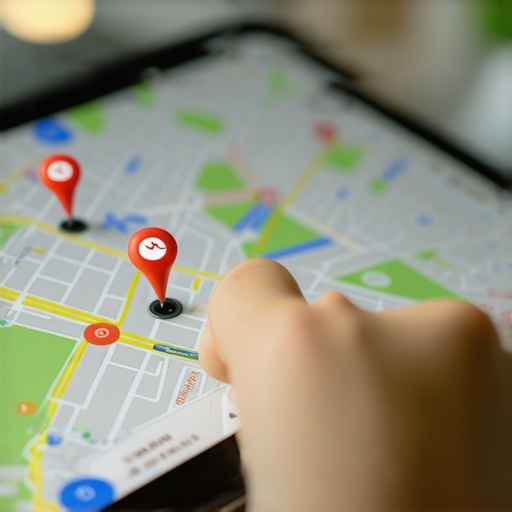
The pin moved. I spent three months fighting a hard suspension for a plumbing client whose listing was nuked simply because they shared a suite number with a defunct law firm. Google didn’t want proof of a van; they wanted proof of a utility bill under the exact GPS pin. That experience taught me that the local algorithm is not a search engine in the traditional sense. It is a spatial database where trust is the primary currency. When your business category is wrong, you are not just invisible. You are an anomaly in the data that the system wants to purge.
The reinstatement war that changed everything
Business category selection is the most significant relevance signal within the Google Maps ecosystem. Choosing a wrong primary category creates a fundamental mismatch between the physical reality of your business and the digital index, which often results in immediate ranking loss or profile suspension. To recover, you must align your category with local search intent and verifiable business documentation. I remember the smell of wet concrete on the day I finally visited that plumber to take photos of his physical sign. It was the only way to prove to a remote support agent that he was a contractor and not a legal professional. The algorithm had merged his data with the previous tenant, and the incorrect category was the anchor pulling him into the abyss. This is why you need a gmb keyword and category research toolkit to prevent these overlaps before they trigger a manual review.
The hidden cost of a wrong category
A mismatched category prevents your business from appearing in the local pack for high intent searches. If you are a personal injury lawyer but your category is set to general practice, you are competing in the wrong bucket. This mistake dilutes your proximity signal. The algorithm cannot calculate your relevance to a specific user if it does not know what you sell. I have seen businesses lose eighty percent of their call volume because a well meaning assistant changed the primary category to something broad. The system views this as a lack of focus. It is better to be the master of a narrow category than a ghost in a broad one. When you face sudden map pack loss while organic rankings stay stable, the category is almost always the culprit. The local filter is far more sensitive than the traditional web index.
Why your primary category dictates your revenue
Google uses your primary category to determine which local services ads and map features you can access. If your category does not match the services you provide, you will be barred from using the most effective conversion tools. This is particularly true for service area businesses that rely on trust signals to survive. The math is simple; if the category is wrong, the conversion rate is zero. I often suggest that clients look into the category research move that finds untapped local phone leads to ensure they are not missing out on high volume niches. The difference between ‘Plumber’ and ‘Drainage Service’ can be thousands of dollars in monthly revenue. The logistics of search behavior show that users click the first category they see that matches their immediate pain point.
“Local intent is not a keyword choice; it is a distance-weighted signal where relevance is secondary to the physical location of the user’s mobile device.” – Map Search Fundamental
The forensic audit of local trust signals
Verifying your category requires a deep dive into your existing citations and website metadata. You cannot just change the category in the dashboard and hope for the best. You must first ensure that your NAP (Name, Address, Phone) data across the web supports the change. If your Yelp profile says one thing and your Google profile says another, the system will flag the inconsistency. This is where the specific method to audit local citation health becomes mandatory. You are building a case for the algorithm. You are proving that your business belongs in a specific category. I have spent hours cleaning up old directory listings that were still pointing to a category the business abandoned five years ago. The ghost of old data is the greatest threat to modern rankings.
How to navigate a category change without a suspension
Changing your primary category is a high risk action that can trigger an automatic hard suspension. To minimize this risk, you should make the change during a period of low activity and ensure your documentation is ready. Do not change your address and your category at the same time. This is a red flag for the spam team. If you find yourself in trouble, you might need local seo services to fix gmb hard suspension for service area business to navigate the appeal process. The support team is looking for a physical sign and a utility bill. They want to see that you are a real person at a real location. The logic of a check in signal or a customer photo taken at your site is far more powerful than any text description you can write.
Local Authority Reading List
- Researching hidden search volume
- Fixing address discrepancies
- Real local rank tracking
- Manual suspension restoration
The math of centroid shifts and proximity
Proximity is calculated from the centroid of your business category clusters in a given city. When you change your category, you are essentially moving your business in the digital eyes of the algorithm. You might find that you rank better in the suburbs but lose the city center. This is due to how Google balances competition within a specific category. If there are too many ‘Roofers’ in one zip code, the filter will hide the ones with the weakest trust signals. This is why how to beat the proximity filter in local search is a constant conversation among specialists. You must understand the physics of a 3 mile radius shift. The density of your competitors determines the strength of the signal you need to break through the noise.
Why your website content must match your map pin
The Google Business Profile algorithm scrapes your linked landing page to verify your category selection. If your website talks about ‘Home Remodeling’ but your category is ‘Kitchen Remodeler’, you are creating friction. The AI Overview tools will pick up on this discrepancy and lower your prominence score. You need to ensure your headers and schema markup align perfectly. I often use a local seo tools to optimize google business profile listing approach to keep everything in sync. The website is the foundation, and the map listing is the beacon. If the foundation is shaky, the beacon will flicker. Information gain is achieved by providing specific data points that your competitors ignore, such as the exact materials you use or the specific neighborhoods you serve.
The danger of keyword stuffing in a business name
Adding keywords to your business name to match your category is a direct violation of Google TOS. While it might provide a short term ranking boost, it is the fastest way to get a manual penalty. I have seen entire networks of listings wiped out because they added ‘Best Plumber City Name’ to their profile. It is better to use the truth about using keyword stuffed names for short term gains as a cautionary tale. The algorithm is now smart enough to check your legal business registration. If the names do not match, the trust score evaporates. You should focus on building legitimate prominence through reviews and customer engagement rather than trying to game the naming convention. A clean profile with a correct category will always outlast a spammy one in the long run.
“Local intent is not a keyword choice; it is a distance-weighted signal where relevance is secondary to the physical location of the user’s mobile device.” – Map Search Fundamental
Dealing with the hard suspension after a correction
A hard suspension means your business is no longer visible on Google Maps and your reviews are hidden. This usually happens when the algorithm suspects your category change is an attempt to impersonate another business. Recovery requires a forensic audit of your digital footprint. You may need recovering a google business profile after a hard suspension to get your leads back. The process is grueling and requires patience. You must provide clear, unedited photos of your business license and your storefront. The street photographer in me knows that a single clear photo of a van with a logo can be the difference between a thriving business and a closed one. The spam team has no room for ambiguity.
Local SEO tools that actually show the truth
Most rank tracking tools fail because they do not account for the hyper local nature of the proximity filter. You need a tool that can track your position by latitude and longitude. A business might rank #1 on the north side of the street and #10 on the south side. This is why how to track your map position by latitude and longitude is the only way to see the real picture. If you rely on national tools, you are flying blind. You need to know exactly where your signal starts to fade. I prefer to use a gmb ranking toolkit buy strategy that focuses on grid tracking. This allows you to see the physical reach of your category influence and make adjustments to your local content accordingly. The map is the territory, and the data is the guide.