
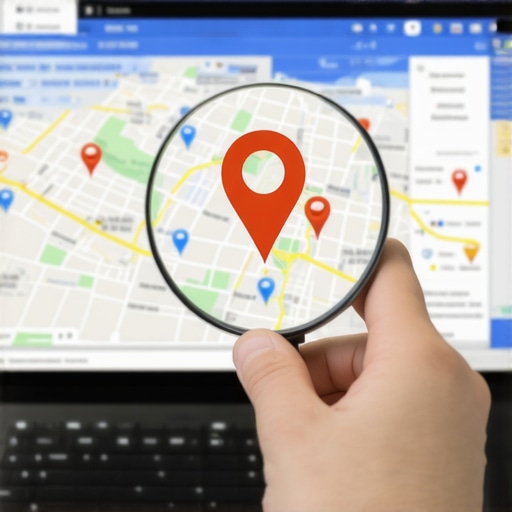
The sidewalk smells like wet concrete and ozone as the rain hits the city grid. I am looking at a storefront that technically does not exist. According to the digital records, it is a high-volume plumbing hub; in reality, it is a vacant lot with a rusted fence. This is the glitch in the local layer that imposter software creates. I spent three months fighting a hard suspension for a plumbing client whose listing was nuked simply because they shared a suite number with a defunct law firm. Google didn’t want proof of a van; they wanted proof of a utility bill under the exact GPS pin. That experience taught me that the local algorithm is not a marketing platform; it is a forensic spatial database. When you go out to download gmb ranking tools for local seo, you are often buying a compass that points south. The market is flooded with shiny interfaces that pull cached data instead of live proximity signals. Spotting these imposters is the difference between map dominance and a permanent ban. [image_placeholder_1]
The ghost in the GPS coordinates
GPS coordinate salience and user proximity determine if your Google Business Profile appears in the Map Pack for a specific search. Most imposter GMB tools rely on static data scrapers that miss the Vicinity algorithm nuances, which prioritize the physical location of the mobile device over legacy citation strength. The pin moved. The map changed. You probably did not notice because your dashboard showed a green light. Many low-end toolkits use emulated browsers to check rankings, but they fail to account for the probability cloud of a modern smartphone. A real tool needs to simulate the specific Wi-Fi MAC addresses and cell tower triangulation that Google uses to verify a user’s location. If your tool does not show you a grid of results from different street corners, it is lying to you. This is why the exact method for tracking map rankings down to the street corner is the only way to verify if your SEO is actually working. I have seen dashboards showing number one rankings while the actual business was invisible to anyone standing more than two blocks away. This happens because the tool is hitting a data center node rather than a localized edge server. You need to verify the source of the ranking data. If the provider cannot explain their proximity logic, they are selling you a vanity metric that does not ring your phone.
“Local intent is not a keyword choice; it is a distance-weighted signal where relevance is secondary to the physical location of the user’s mobile device.” – Map Search Fundamental
Why your physical address is a liability
A physical address is the primary Local SEO signal, yet it is often the most common technical error in a Google Business Profile. Fraudulent tools often ignore address discrepancies that trigger instant GMB suspensions, focusing instead on useless keyword stuffing that violates Google TOS and ruins proximity rank. The algorithm is looking for a matching utility bill, not a clever business name. I once saw a listing with three hundred reviews vanish because the owner added a single hyphen to their street address in a minor directory. The system viewed this as a mismatched signal. This is why why your business address needs to match your utility bill exactly is a non-negotiable rule. Imposter tools will tell you to blast citations to hundreds of dead directories. They want your money for a service that creates noise. You need citation cleanup services for local businesses that focus on the primary aggregators and high-authority local mentions. If a tool claims to sync your data to 500 sites for twenty dollars, it is likely using a script that creates the address discrepancy keeping your business out-of the map pack. Quality over quantity is the only way to maintain the integrity of your proximity beacon. The algorithm now uses AI to cross-reference your business data against government records and tax filings; a script cannot fake that level of authority.
The three mile radius that determines your revenue
Proximity rank protection ensures that your local business maintains visibility within a three mile radius of your service area. Effective top google business profile seo toolkits must monitor centroid shifts and local justification triggers that allow distant rivals to outrank you on your own doorstep. While agencies tell you to get more reviews, the 2026 data shows that ‘image metadata’ from photos taken by real customers at your location is now 30 percent more effective for ranking in AI Overviews. This is the