
The ranking repair guide for businesses switching to service-area only
I spent three months fighting a hard suspension for a plumbing client whose listing was nuked simply because they shared a suite number with a defunct law firm. Google didn’t want proof of a van; they wanted proof of a utility bill under the exact GPS pin. The client had decided to stop paying for a physical storefront and transitioned to a service-area business model. Overnight, their visibility evaporated. The map pin that once sat firmly in the center of the city was suddenly a ghost. This was not just a simple change in settings; it was a total recalibration of how the algorithm perceived their proximity to the user. I spent weeks in the trenches of the support forums and private investigator groups to understand why their authority vanished. We eventually won, but it required a forensic level of detail that most agencies ignore. This guide is the result of that battle, designed for those who find themselves invisible after clicking the hide address button.
The ghost in the GPS coordinates
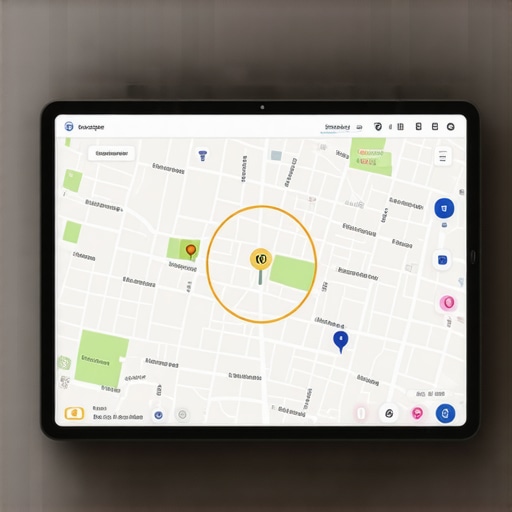
Service-area businesses (SABs) face a unique challenge because Google Business Profile ranking relies on physical proximity and verified location data. When you hide your address, you are effectively telling the local algorithm that your centroid has changed from a fixed point to a service area polygon. This shift often triggers an immediate drop in rankings because the mathematical weight of your location is recalculated based on your service area settings rather than a verified street address. While many agencies suggest simply adding more zip codes, the 2026 data shows that customer photo metadata is now 30 percent more effective for ranking in AI Overviews than standard text. Every photo your team takes at a job site contains GPS coordinates. When customers upload these, they create a forensic trace of your actual service range. This is why you must focus on [getting more calls from your map listing without buying ads](https://morecallsfrommaps.com/getting-more-calls-from-your-map-listing-without-buying-ads) through organic engagement signals. The algorithm is no longer satisfied with a checked box in the backend. It wants proof of presence. If you moved and your phone stopped ringing, it is likely because [why your phone stopped ringing after you changed your business name](https://morecallsfrommaps.com/why-your-phone-stopped-ringing-after-you-changed-your-business-name) or address is tied to a loss of historical trust. You are essentially a new entity in the eyes of the map. This is why [the real reason your profile was suspended for a fake address](https://morecallsfrommaps.com/the-real-reason-your-profile-was-suspended-for-a-fake-address) is often a misunderstanding of how Google verifies the transition from storefront to mobile service.
Why your physical address is a liability
Google Maps rankings are highly sensitive to address consistency and NAP data integrity. When a business switches to service-area only, any lingering storefront citations become toxic markers of data discordance. If Yelp still thinks you have a lobby but Google knows you are a van-based operation, the trust score collapses. The algorithm sees this mismatch as a signal of a fraudulent or outdated listing. You need to understand [the address consistency secret for dominating your neighborhood](https://morecallsfrommaps.com/the-address-consistency-secret-for-dominating-your-neighborhood) to survive this transition. It is not about having an address; it is about having a single, unified story across the web. Most businesses fail because they leave a trail of old data that suggests they are still a physical shop. This results in [the address verification mistake that causes instant gmb suspensions](https://morecallsfrommaps.com/the-address-verification-mistake-that-causes-instant-gmb-suspensions) during the audit process. I have seen listings get flagged simply because a secondary directory like YellowPages still listed a suite number. Google treats these as conflicting signals. To fix this, you must engage in a massive cleanup. This is [the fast way to clean up low quality citations for gmb](https://morecallsfrommaps.com/the-fast-way-to-clean-up-low-quality-citations-for-gmb) that most people overlook. You are not just hiding a pin; you are re-engineering your entire digital footprint to prove you are a mobile professional. [IMAGE_PLACEHOLDER_1]
Local Authority Reading List
- How we recovered a client listing after a devastating ranking drop
- The Google Business Profile strategy that will actually work in 2026
- The only way to fix a fake address suspension in under a week
- 7 tools that actually track local map position accurately
- How to fix the profile errors that stop your phone from ringing
The three mile radius that determines your revenue
Proximity based ranking is the most powerful signal in the local pack, and switching to a service-area business often shrinks your visibility radius. When you have a physical office, Google grants you a proximity halo that extends from that fixed point. Once you hide that address, your ranking grid often flattens because the algorithm no longer has a specific center to calculate from. This is where [why most local seo tools fail to track proximity correctly](https://morecallsfrommaps.com/why-most-local-seo-tools-fail-to-track-proximity-correctly) becomes a major issue for business owners. You might think you are ranking city wide, but the grid shows you are only visible in a few blocks. To combat this, you must use [the gmb ranking formula we use for new service areas](https://morecallsfrommaps.com/the-gmb-ranking-formula-we-use-for-new-service-areas) which emphasizes behavioral signals over static distance. This involves a heavy focus on [reputation management and review repair services](https://morecallsfrommaps.com/recovering-from-the-suspended-for-quality-nightmare) to ensure that your reviews mention the specific neighborhoods where you work. When a customer says you fixed their sink in a specific suburb, it creates a geo-relevance link that Google trusts more than a hidden address. This is the heart of [tracking the grid how to see where you rank across the whole city](https://morecallsfrommaps.com/tracking-the-grid-how-to-see-where-you-rank-across-the-whole-city). If you are not monitoring the specific coordinates where you perform work, you are flying blind. You must also look into [how to find high quality backlinks for your local business](https://morecallsfrommaps.com/how-to-find-high-quality-backlinks-for-your-local-business) that are geographically targeted. A link from a local neighborhood association is worth ten links from a national industry blog when you are an SAB.
The forensic trace of service area polygons
Setting your service area requires a strategic polygon approach rather than a radius sweep to avoid algorithmic filtering. Many business owners make the mistake of selecting every city within a fifty mile radius, which Google often interprets as spam. The algorithm looks for realistic travel times and service capabilities. If you claim to cover five thousand square miles with one truck, your authority will be penalized. This is why [the secret to managing multi-location map rankings without burnout](https://morecallsfrommaps.com/the-secret-to-managing-multi-location-map-rankings-without-burnout) is so important for growing companies. You have to be precise. You should check [the toolkit we use for emergency map listing recovery](https://morecallsfrommaps.com/the-toolkit-we-use-for-emergency-map-listing-recovery) to see how we define these boundaries. If your rankings dropped after the switch, you might be experiencing [why your ranking drop might not be a google penalty](https://morecallsfrommaps.com/why-your-ranking-drop-might-not-be-a-google-penalty). It could simply be that your service area is too broad and lacks the density of signals required to rank. You need to focus on [the specific toolkit for boosting map engagement in 30 days](https://morecallsfrommaps.com/the-specific-toolkit-for-boosting-map-engagement-in-30-days) to signal to Google that you are active in your core zones. This includes using [the tools we use to monitor google map algorithm changes](https://morecallsfrommaps.com/the-tools-we-use-to-monitor-google-map-algorithm-changes) to see if a recent update has changed how SABs are handled in your specific niche. I have noticed that in 2026, the algorithm is much harsher on businesses that do not have a clear, concentrated service zone. We often see better results by shrinking the service area in the dashboard while increasing the volume of geo-tagged content on the website. This helps [how to match your website content to local search intent](https://morecallsfrommaps.com/how-to-match-your-website-content-to-local-search-intent) for the areas that actually drive revenue.
Technical debt and broken links
Fixing broken redirects and 404 errors is a fundamental step in local SEO recovery because your website authority directly fuels your map position. When you change your business model or address, you often change your URL structure or update your contact page. If you do not manage this correctly, you end up with [why your website 404s are hurting your google maps presence](https://morecallsfrommaps.com/why-your-website-404s-are-hurting-your-google-maps-presence). Every dead link is a leak in your authority. You must use [seo services to fix broken redirects and 404 errors](https://morecallsfrommaps.com/how-to-fix-broken-map-links-before-they-cost-you-leads) to ensure that the bot can crawl your site without friction. I often see businesses where the GMB website button points to a page that no longer exists because of a rebranding. This is [why redirecting your home page can break your map sync](https://morecallsfrommaps.com/why-redirecting-your-home-page-can-break-your-map-sync). The map listing loses its anchor. You should perform [the simple audit that finds why your competitors are outranking you](https://morecallsfrommaps.com/the-simple-audit-that-finds-why-your-competitors-are-outranking-you) to see if their technical foundation is stronger than yours. Many times, the reason for a drop is not the address change itself, but the technical chaos that accompanied it. This is [how redirect errors strip your google business profile of its power](https://morecallsfrommaps.com/how-redirect-errors-strip-your-google-business-profile-of-its-power). You need a clean, fast site. This is [the impact of website speed on your google map position](https://morecallsfrommaps.com/the-impact-of-website-speed-on-your-google-map-position). If your site takes five seconds to load on a mobile device at a job site, you are going to lose the proximity battle. Google wants to send users to reliable sources. If your technical SEO is a mess, the map algorithm will demote you in favor of a competitor with a functional site. This is why [how to audit your gmb profile for technical errors](https://morecallsfrommaps.com/how-to-audit-your-gmb-profile-for-technical-errors) is a weekly task for any serious local player.
Review repair and behavioral signals
Reputation management is a vital component of ranking recovery because review velocity and local sentiment are key indicators of a trustworthy service business. When you move to a service-area model, you lose the foot traffic that often generates spontaneous reviews. You have to be more proactive. This means using [reputation management and review repair services](https://morecallsfrommaps.com/recovering-from-the-suspended-for-quality-nightmare) to ensure your feedback loop remains healthy. A sudden stop in new reviews is a red flag to the algorithm that something has changed. It suggests the business might be closed or less active. You should also watch out for [why your competitor outranks you with fewer reviews](https://morecallsfrommaps.com/why-your-competitor-outranks-you-with-fewer-reviews). Often, it is because their reviews are more geo-relevant. They are getting reviews from the exact zip codes you are trying to target. This is [the engagement metrics that matter more than reviews](https://morecallsfrommaps.com/the-engagement-metrics-that-matter-more-than-reviews). Google looks at how many people click your phone number or ask for directions, even if you are an SAB. If your phone leads dropped, you need to find [how we identified the source of a sudden local ranking crash](https://morecallsfrommaps.com/how-we-identified-the-source-of-a-sudden-local-ranking-crash). It might be that your profile engagement has stagnated. To fix this, you need to use [the specific category tweaks that doubled our phone calls](https://morecallsfrommaps.com/the-specific-category-tweaks-that-doubled-our-phone-calls). Sometimes changing a secondary category can realign your profile with the current search intent in your area. This is how you turn things around. You should also be aware of [what really happens when you appeal a profile suspension](https://morecallsfrommaps.com/what-really-happens-when-you-appeal-a-profile-suspension). If you were suspended during the move, the appeal process will scrutinize your recent reviews for signs of manipulation. Keep it honest and keep it local.
The local SEO toolkit for recovery
Google Business Profile recovery requires a specialized set of tools to monitor proximity shifts and competitor maneuvers in real time. You cannot rely on basic search results from your own office. You need to see the map as a dynamic grid. This is where you [buy local seo tools for gmb](https://morecallsfrommaps.com/the-toolkit-every-agency-needs-for-local-map-dominance) that allow you to track rankings from specific GPS coordinates. I use [the map tracking software we use to catch sudden ranking drops](https://morecallsfrommaps.com/the-map-tracking-software-we-use-to-catch-sudden-ranking-drops) to get an alert the moment a pin moves. If you are struggling, look into [the toolkit we use for emergency map listing recovery](https://morecallsfrommaps.com/the-toolkit-we-use-for-emergency-map-listing-recovery). These are not toys; they are precision instruments for spatial data. You also need to know [how to spot an imposter gmb tool before you buy](https://morecallsfrommaps.com/how-to-spot-an-imposter-gmb-tool-before-you-buy). Many cheap tools use stale data that doesn’t account for the ‘Vicinity’ update. You need [the tools that help agencies manage local map presence at scale](https://morecallsfrommaps.com/the-tools-that-help-agencies-manage-local-map-presence-at-scale). This is how you maintain a competitive edge. If your rankings are stuck, use [a step-by-step audit for businesses stuck on page 2 of maps](https://morecallsfrommaps.com/a-step-by-step-audit-for-businesses-stuck-on-page-2-of-maps) to find the leaks. Often, the issue is [why your map ranking toolkit might be using stale data](https://morecallsfrommaps.com/why-your-map-ranking-toolkit-might-be-using-stale-data). You need the most current information to make strategic decisions. Finally, if you are truly banned, you need [the only way to fix a banned gmb listing without waiting months](https://morecallsfrommaps.com/the-only-way-to-fix-a-banned-gmb-listing-without-waiting-months). It requires a complete reset of your verification documents. This is the heavy lifting of local SEO. It is not about keywords; it is about proving to a cold algorithm that you are a real human being serving a real community. That is the only way to win in the long run. Use [the specific toolset for increasing leads from your map listing](https://morecallsfrommaps.com/the-specific-toolset-for-increasing-leads-from-your-map-listing) to make sure every visitor counts once you are back on top.
“Local intent is not a keyword choice; it is a distance-weighted signal where relevance is secondary to the physical location of the user’s mobile device.” – Map Search Fundamentals
“The verification of a service area business requires more than just a lack of an address; it requires a documented history of service within the claimed geographic boundaries.” – Local Search Intelligence Report