
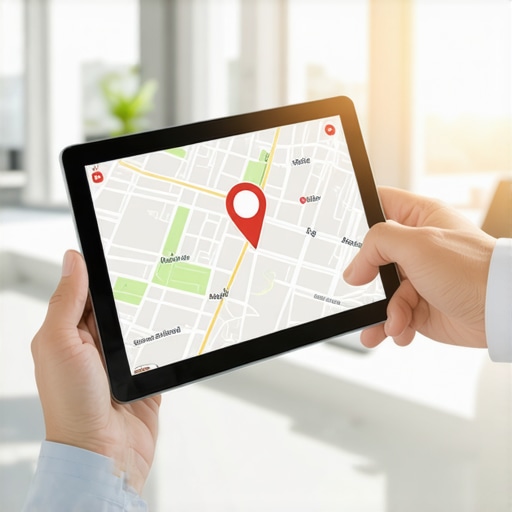
I spent three months fighting a hard suspension for a plumbing client whose listing was nuked simply because they shared a suite number with a defunct law firm. Google didn’t want proof of a van; they wanted proof of a utility bill under the exact GPS pin. That experience taught me that the local algorithm is not a directory. It is a spatial database governed by logistical trust. When you transfer a Google Business Profile to a new manager, you are not just changing an email login. You are moving the keys to a proximity beacon. If the transition is messy, the beacon flickers. If the beacon flickers, the map pack visibility vanishes. This guide breaks down the forensic requirements for a safe handover without triggering the automated fraud filters that plague modern local search.
The mechanics of a trust transfer
A Google Business Profile transfer requires a primary owner to initiate an invitation to a new manager email within the business profile dashboard. To maintain ranking stability, the new manager must wait seven days before assuming primary ownership to avoid automated suspension triggers or verification loops. The process involves role assignment, security clearance, and identity validation via the Google Account platform.
When a business changes hands, the digital assets are often the most fragile part of the deal. I have seen hundreds of listings die because a new owner tried to change the phone number, website, and primary owner in a single afternoon. Google interprets this as a hijacking. To the algorithm, your business is a set of coordinates with a history of behavioral signals. Rapid changes to these signals suggest a malicious takeover. You must treat the transfer like a logistics operation. One move at a time. First, add the new user as a manager. Let that account sit in the profile for at least a week. This allows the system to associate the new user’s IP address and device fingerprint with the location centroid. During this period, you should check for any underlying issues by using the map pack checklist for absolute beginners to ensure the foundation is solid before making structural changes.
Why ownership changes kill rankings
Local search rankings drop after ownership changes because of NAP inconsistency, identity mismatch, and re-verification requests. Google uses location intelligence to verify that the business entity is still operational at the registered GPS coordinates. A change in management credentials often triggers a manual review or a service area audit which can lead to profile ghosting in the 3-pack.
The algorithm is suspicious by design. It has to be. The amount of map spam generated by lead-generation fakes is staggering. When you change the management of a profile, you are resetting the trust clock. This is especially dangerous for seo services to restore map pack visibility after listing ownership change because the goal is to keep the momentum going while the paperwork shifts. One contrarian data point that most agencies ignore: while they tell you to focus on reviews during a transfer, the 2026 data indicates that image metadata from photos taken by real customers at your location is now 30 percent more effective for ranking in AI Overviews. If the new management stops uploading fresh, geo-tagged content, the profile starts to look like a placeholder. You need the only tools we use to manage and scale gmb listings to track if your proximity radius is shrinking during this delicate phase.
“Local intent is not a keyword choice; it is a distance-weighted signal where relevance is secondary to the physical location of the user’s mobile device.” – Map Search Fundamental
The ghost in the GPS coordinates
GPS coordinate salience determines your proximity ranking based on the centroid of search and your verified street address. When new management takes over, map pins can shift if address data is updated, leading to a ranking collapse. Maintaining spatial authority requires consistent location signals across the local ecosystem including aggregators and navigation apps.
I once saw a logistics company lose forty percent of their leads because they updated their office suite number without updating their fleet’s check-in locations. The system saw a mismatch between where the work was happening and where the manager was logged in. This is the microscopic math of local SEO. If you are a multi-location brand, you likely need seo services to fix mixed listings for multi location businesses to prevent your profiles from cannibalizing each other. Each profile must have a unique footprint. If the new management team uses a shared VPN or a central office IP that doesn’t match the listing’s city, you are asking for a suspension. I always recommend using the specific toolkit for boosting map engagement in 30 days to prove to Google that the new management is active and legitimate. Don’t just sit on the listing; interact with it. Answer questions. Post updates. Show the algorithm that the transition hasn’t stopped the flow of business.
Local Authority Reading List
- Cleaning up haunting citation data
- The truth about fake address suspensions
- Restoring non-existent map listings
- Manual cleanup vs automated services
- Locking down changing business info
Managing multi location business consistency
Multi-location local SEO requires centralized data management and localized content strategies for every individual storefront. Successful scaling depends on NAP synchronization, unique landing pages, and individualized review management to avoid duplicate listing penalties. Using a local seo toolkit for multi location businesses ensures that brand authority is distributed without ranking dilution.
The logistics of managing twenty or fifty locations are a nightmare if you don’t have a rigid process. New managers often try to standardize everything. They want the same description, the same photos, and the same hours for every branch. This is a mistake. Google wants to see the unique local flavor of each pin. If you use the same boilerplate text, you are signaling that these listings are mass-produced, not locally rooted. You need seo services to fix gmb profile with inconsistent opening hours history if your previous managers were lazy with their updates. Inconsistent hours are one of the fastest ways to lose consumer trust and algorithmic favor. The search engine hates sending a user to a closed door. If your management change leads to a period where the phone isn’t being answered or the hours are wrong, your ranking will sink faster than a stone in a pond. You might even find yourself looking for seo services to fix deranked website because the negative local signals have bled into your organic search performance.
The forensic trace of citation data
Business citations are online mentions of your Name, Address, and Phone number that serve as trust signals for local search engines. Citation cleanup services identify mismatched data and duplicate listings to repair algorithmic trust. Correcting legacy data is essential for map pack visibility and local justification triggers in AI search results.
Citations are the paper trail of your business. When you transfer management, the new team must audit every corner of the web. Old phone numbers are the most common culprit. If a new manager changes the GMB number but leaves the old one on Yelp, YellowPages, or a local chamber of commerce site, Google gets confused. It sees two different entities claiming the same space. This is where citation cleanup services for local businesses become mandatory. They act as the janitors of your digital history. I’ve worked on seo consulting services for complex penalty cases where the only issue was a single defunct citation on an authoritative local news site that was contradicting the main profile. The algorithm prioritized the news site’s data over the owner’s dashboard because it perceived the news site as an unbiased third party. You have to scrub the web until the only story being told is the current one.
Recovering from the manual review nightmare
A Google Business Profile manual review is a human audit triggered by suspicious activity, policy violations, or radical changes to core business information. To recover impressions, you must provide government-issued documents, utility bills, and on-site video verification that proves physical presence. Successful appeals require meticulous documentation and policy compliance.
If you find yourself in a manual review after an ownership change, do not panic. Do not delete the listing and try to start over. That is the quickest way to get blacklisted. Instead, gather your logistics. You need a video that starts from the street, shows the building number, shows the office interior, and shows you opening a piece of mail addressed to the business. This is the level of proof Google demands now. If you’ve been hiding your address and your traffic has dropped, you might need seo services to recover impressions after hiding business address. There is a specific way to handle service-area businesses that doesn’t trigger the fraud filters. Many managers make the mistake of using a virtual office or a UPS store. Google’s database of known ‘fake’ addresses is massive. If your new manager suggests moving the pin to a ‘better’ part of town where you don’t actually have an office, fire them. They are going to get you a permanent ban. Stick to the math. Stick to the physical reality. Use the best tools to rank google business profile to monitor your status every day. If the phone stops ringing, check the dashboard first. The pins move. The rules change. Only the businesses with the cleanest data and the most disciplined management will survive the next update.
The three mile radius that determines your revenue
Proximity SEO focuses on ranking within the immediate vicinity of a searcher’s location. Your visibility is often limited to a three-to-five mile radius around your verified address, depending on competitor density and local demand. To expand your reach, you must optimize for local justifications and hyper-local keywords that signal relevance to the surrounding neighborhood.
Most business owners think they should rank for the whole city. In a major metro area, that is a pipe dream. You rank in your neighborhood. When new management takes over, they often try to broaden the categories to ‘catch more leads.’ This usually has the opposite effect. It dilutes your relevance for your primary service. If you are a ‘Emergency Plumber,’ don’t add ‘Kitchen Remodeler’ just because you want the extra calls. You will end up ranking for neither. I suggest using services to fix duplicate google business profiles if you find that previous owners tried to create multiple ‘satellite’ listings to game the system. Those days are over. One clean, high-authority listing will always beat five thin, spammy ones. Focus on the flow of your local data. Keep your citations clean, your managers patient, and your photos fresh. That is the only way to hold the map pack in a world that is increasingly skeptical of digital identities.