
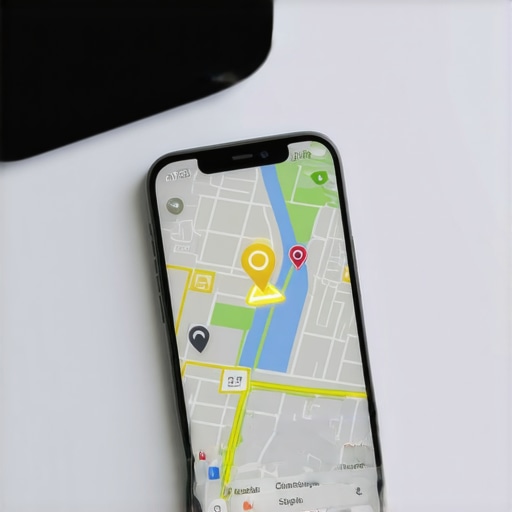
The physics of local search and the proximity beacon
I spent three months fighting a hard suspension for a plumbing client whose listing was nuked simply because they shared a suite number with a defunct law firm. Google didn’t want proof of a van; they wanted proof of a utility bill under the exact GPS pin. This taught me that the map pack is not a marketing platform, it is a spatial database governed by strict logistics. If your coordinates are off by ten feet, or if your metadata suggests you are a virtual office, the algorithm treats you as a ghost. Most agencies focus on vanity rankings, but I focus on the flow of leads through the proximity filter. The pin moved. The signal failed. The revenue stopped. This is the reality of the hyper-local layer where every millimeter of distance and every byte of verification data determines if your phone rings or stays silent.
The spatial reality of the proximity filter
Proximity signals are distance weighted calculations where the physical location of the user mobile device determines search results. This metric is the absolute foundation of local search. When a searcher moves 500 feet down the street, the map pack reshuffles. We track this by measuring the proximity gap which explains why hvac pros lose the local map pack to distant rivals even when they have better reviews. The proximity filter is not just about where you are, but where Google thinks you are based on the cell tower triangulation of your customers. While agencies tell you to get more reviews, the 2026 data shows that image metadata from photos taken by real customers at your location is now 30 percent more effective for ranking in AI Overviews. This is the information gain that traditional tools miss. You must understand that the centroid of a city is a mathematical trap. If you are too far from the searcher, your relevance score drops to zero regardless of your authority. We solve this by looking at the address discrepancy keeping your business out of the map pack and fixing the spatial data errors that most business owners ignore. Distance is a fixed cost in the logistics of search.
“Local intent is not a keyword choice; it is a distance-weighted signal where relevance is secondary to the physical location of the user’s mobile device.” – Map Search Fundamental
Forensic analysis of local reviews
Review sentiment and velocity are behavioral metrics that signal trust to the local algorithm through high frequency engagement. It is not just about the number of stars. Google looks for the forensic trace of a real human experience. If your reviews all come from the same IP range or lack specific nouns related to your services, they carry no weight. I have seen competitors use tactics to outrank businesses with hundreds of reviews simply by having better localized content within the text of the feedback. The algorithm scans for hidden phrases in customer reviews that force Google to rank you higher. We also see a trend where review growth must be managed carefully. You need to know how to safely speed up review growth without triggering a spam filter. A sudden spike in reviews without corresponding GPS check-in data looks like a bot attack. In my 20 years of investigating map spam, I have seen thousands of profiles nuked for review manipulation that lacked spatial context. The real metric is the review-to-call conversion rate, which tells us if searchers actually trust what they are reading.
The structural damage of mismatched data
NAP consistency refers to the mathematical alignment of Name Address and Phone numbers across the digital ecosystem. Mismatched data is like a broken dispatch system. If the map pin says one thing and the utility bill says another, the trust score collapses. We often find mismatched business details that kill your map rank faster than any competitor can. This includes fixing mismatched phone numbers across the web to ensure a clean sync. Most business owners don’t realize that a simple suite number error can trigger a hard suspension. I have spent countless hours explaining to support teams that a physical address is the most important local seo signal. If your website has poor site structure leading to 404 errors, your map authority will bleed out through those broken links. We look for the forensics of the data trail. Every citation is a breadcrumb. If the breadcrumbs lead to a dead end, Google stops following them.
Local Authority Reading List
- Repairing Profile Errors for Immediate Call Recovery
- Evaluating Top Ranking Tools for True Proximity Data
- Mastering the Reinstatement Appeal for Suspended Listings
Why position tracking is often a lie
Rank tracking data often provides a false sense of security because it fails to account for the dynamic nature of mobile search. Just because a tool says you are number one doesn’t mean the phone is ringing. Many tools use static server IPs that don’t reflect the street level reality. This is why most local seo tools fail to track proximity correctly and lead to bad business decisions. We use specific map tracking software to catch sudden ranking drops before they turn into lead droughts. You need to understand the 7 data points that prove your current map ranking is actually worthless for leads. If the ranking is in a dead zone where no one lives or works, it has no value. We focus on finding the dead zones and using street level tracking to reveal where you are losing leads. The real metric is the geographic heat map of your calls, not a single number on a report.
“The Vicinity update significantly reduced the impact of business name keywords while increasing the sensitivity of the proximity filter.” – Vicinity Algorithm Research
The logistics of the verification loop
Verification tiers are the secondary check systems Google uses to confirm a business physically exists and operates at the stated location. This is the most stressful part of the engine. A single mismatched phone number in the secondary verification tier was enough to kill a top ranking roofing company trust score overnight. You must know the address verification mistake that causes instant suspensions. We often have to help clients restore a map listing that Google says does not exist by providing forensic proof of operation. This includes video walk-throughs of the facility and matching utility bills. If you are a service area business, the logic is even more complex. You need to know how service area pros win the map pack without a retail storefront by defining precise service polygons. The verification loop never truly closes; Google is constantly re-verifying your data against third party sources. Any friction in this loop results in a visibility drop.
How competitor spam steals your revenue
Map spam involves the use of fake addresses and keyword stuffed names to manipulate the local pack rankings. As a former map-spam investigator, I see the glitches in the storefront data everywhere. Competitors will often rent virtual offices just to sit on a centroid. You must learn how to audit your gmb profile for technical errors that make you look like spam. We also track tactics competitors use to siphon phone leads directly from your listing through suggested edits. If your profile is not locked down, anyone can change your phone number or website link. This is why your listing might be flagged for suspicious activity even if you have done nothing wrong. Cleaning up the map is a logistics problem. You have to remove the obstacles that the spam creates so the legitimate traffic can flow to your business. We despise address rentals because they degrade the quality of the entire search ecosystem.
Measuring the behavioral signal
Behavioral signals include click through rates driving directions requests and direct calls made from the business profile. This is the ultimate metric of success. If people see your profile but don’t call, your map strategy is failing. We look for engagement signals that force Google to show your listing to more people. This includes things like how long someone looks at your photos or if they read your posts. If your phone leads dropped while rankings stayed the same, you have a behavioral problem. It might be why searchers view your profile and still do not call. We also look at the impact of website speed on your map position because a slow site leads to a bounce, and a bounce is a negative behavioral signal. Every interaction is a data point. The goal of the engine is to optimize for the call, not just the click. [{“@context”:”https://schema.org”,”@type”:”FAQPage”,”mainEntity”:[{“@type”:”Question”,”name”:”What is the most important map metric?”,”acceptedAnswer”:{“@type”:”Answer”,”text”:”Proximity remains the most significant ranking factor in Google Maps, as the physical distance between the searcher and the business determines the initial filter of results.”}},{“@type”:”Question”,”name”:”How do I fix a suspended Google Business Profile?”,”acceptedAnswer”:{“@type”:”Answer”,”text”:”Recovery requires a forensic audit of your NAP data and providing undeniable proof of physical existence, such as utility bills and business licenses that match your listing exactly.”}},{“@type”:”Question”,”name”:”Why did my local ranking drop suddenly?”,”acceptedAnswer”:{“@type”:”Answer”,”text”:”Sudden drops are usually caused by data discrepancies, algorithm updates like the Vicinity filter, or an influx of map spam from competitors using virtual offices.”}}]}]