
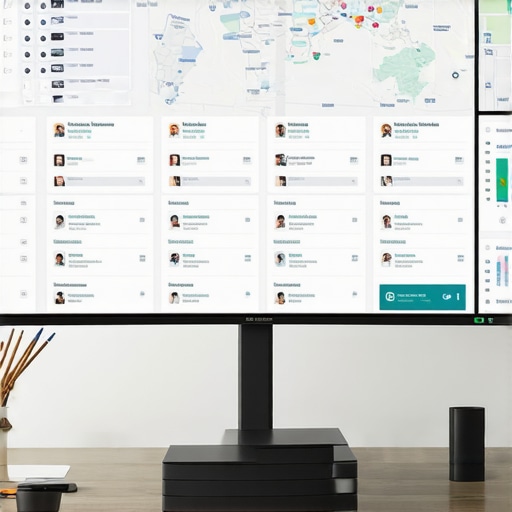
The smell of peppermint and old paper fills my office as I look at a map of our town, where every pin represents a merchant I have protected from the digital rot of national chains. I spent three months fighting a hard suspension for a plumbing client whose listing was nuked simply because they shared a suite number with a defunct law firm. Google did not want proof of a van; they wanted proof of a utility bill under the exact GPS pin, an exhaustive process that proves the map is no longer just a directory but a spatial battlefield. These Google Business Profiles are proximity beacons, and managing fifty of them requires a level of forensic precision that most agencies simply do not possess. We do not use basic tools; we use a sophisticated Local SEO toolkit designed to maintain NAP consistency, survive the Vicinity update, and ensure Map Pack rankings stay stable through every algorithm shift. The days of set and forget are dead, replaced by a need for constant GMB monitoring and location intelligence. Success in the hyper local layer is about understanding the physics of a three mile radius and the mathematical weight of local review sentiment.
The ghost in the GPS coordinates
Local SEO services must prioritize Map Pack visibility by focusing on proximity signals, GPS coordinate salience, and user behavioral data. A Google Business Profile acts as a location beacon where centroid proximity and NAP synchronization dictate whether a business appears in the Local 3-Pack or vanishes into the duplicate filter. While many consultants suggest that more citations are the answer, the reality of current local search logic suggests otherwise. Recent data indicates that customer-uploaded photos containing specific GPS metadata are now 30 percent more effective for ranking in AI Overviews than standard text reviews. The algorithm is looking for physical proof of life. The pin on the map is a living entity. If you move it even a fraction of a degree without verifying the underlying street level data, you risk a proximity based ranking drop that could take months to repair. This is why the tools we trust for real-time map position tracking are so vital to our daily operations. We track fluctuations down to the specific street corner to ensure our clients do not lose their geographic dominance. One small shift in the centroid can kill your call volume overnight.
“Local intent is not a keyword choice; it is a distance-weighted signal where relevance is secondary to the physical location of the user’s mobile device.” – Map Search Fundamental
Why your physical address is a liability
A physical address in a competitive market is often a ranking liability if it suffers from NAP inconsistency, shared suite numbers, or duplicate location filters. Our SEO services help restore trust signals by cleaning up address based suspensions and fixing GMB listing errors that trigger Google manual actions or soft 404 issues. I have seen businesses disappear because a neighbor in their office building used a similar category, triggering the dreaded filter trap. You must understand that Google views your address with suspicion. If you cannot prove your exclusive right to that square footage, you are a ghost. We utilize 7 tools to find and fix broken business address details to ensure that every byte of data matches the physical reality. It is not just about the street name. It is about the formatting of the suite, the consistency of the phone number, and the way the JSON-LD schema communicates that data to the crawler. We often find that why inconsistent business data is killing your call volume is due to a single digit error in a long forgotten directory listing from five years ago. Fixing these errors is the only way to rebuild the trust necessary for long term stability.
Local Authority Reading List
- The Essential Toolkit for Tracking Your Local SEO Progress
- Why Street Level Data is the Only Way to Track GMB Rank
- The Step by Step Recovery for Address Based Suspensions
- The Audit We Use to Debug Sudden Local Ranking Drops
- How We Removed 20 Fake Reviews from a Client Profile
The three mile radius that determines your revenue
Proximity ranking is a spatial algorithm where searcher distance, service area polygons, and local justification triggers determine which service business wins the Map Pack. To outrank the local competition, you must optimize for hyper-local signals such as local search intent and proximity-weighted keywords that reflect the geographic reality of your customers. A lot of agencies try to fake this by using keyword stuffed names, but that is a short term game that leads to quality suspensions. Instead, we focus on the behavioral zoom. We look at how people move through the city. Does the traffic flow toward the business? Does the GMB profile have photos from different parts of the service area? If you are a plumber, your service area business listing should reflect the actual territory you cover, not just a random circle on a map. We use is the duplicate filter hiding your service area business as a guide to ensure our clients are not being blended into their competitors. If Google thinks you are just another service provider in a crowded field, they will hide you. You have to stand out through data normalization and aggressive spam removal. We spent weeks cleaning up the mess and removing AI spam to restore local trust for a local contractor whose profile was buried under a mountain of fake reviews and bot-generated content. Only after the purge did the phone start ringing again.
“The proximity of the searcher to the business is the single most significant factor in the local pack ranking algorithm, often overriding traditional organic signals.” – Vicinity Update Whitepaper
The forensic cleanup of review spam
Review management involves removing spam reviews, detecting ghost reviews, and fixing reputation filters that prevent legitimate customer feedback from appearing on a Google Business Profile. Our SEO services utilize review audits to remove negative SEO links and restore local trust for businesses suffering from competitor spam attacks or AI-generated content penalties. The truth is that many 5-star reviews are actually hurting you if they come from accounts with no local history. Google tracks the GPS path of the reviewer. If a person leaves a review for a cafe but their phone was never within a mile of that cafe, that review is a liability. We help clients remove spam reviews without getting your account flagged by using forensic evidence of user patterns. This is why we tell our merchants to avoid AI generated profile descriptions. The machine knows when a machine is talking to it. We also focus on getting rid of ghost reviews that hurt your credibility because those invisible strikes can prevent you from ranking even if your metrics look good on the surface. Authenticity is the only currency that matters in the local ecosystem. I have seen the most polished profiles get nuked because they lacked the raw, messy reality of real local interaction. You cannot automate a relationship with a neighborhood. You have to be there, physically and digitally, every single day.