
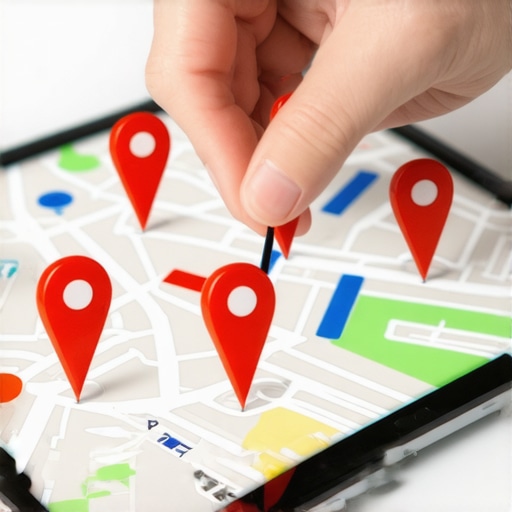
The digital sidewalk is littered with ghosts. As a street photographer of the local search ecosystem, I notice the glitches in storefront data before I see the physical sign. I smell the wet concrete of a city block and see the mathematical conflict of two Google Business Profiles trying to occupy the same GPS coordinate. This is not just a data error; it is a proximity collision that kills revenue. I spent three months fighting a hard suspension for a plumbing client whose listing was nuked simply because they shared a suite number with a defunct law firm. Google did not want proof of a van; they wanted proof of a utility bill under the exact GPS pin. When multiple profiles exist for one entity, the algorithm enters a state of confusion. It suppresses the signals. It hides the pins. To win in the map pack, you must audit the spatial database with forensic precision.
The ghost in the GPS coordinates
Duplicate listings occur when multiple Google Business Profiles share a physical address or primary category. These NAP conflicts trigger the Opossum algorithm filter, causing one profile to be suppressed. Resolving this requires merging data sets or proving distinct entity boundaries to the spam team. I have seen the damage a single rogue listing can do. It acts like a signal jammer. You think you are optimizing, but you are actually splitting your authority between two dead ends. If you are struggling with a local ranking drop, the first place to look is the hidden layer of the map where filtered results reside. Google hates redundancy because it degrades the user experience. They want one clear beacon for every physical door. When you have two, you have zero.
“Local intent is not a keyword choice; it is a distance-weighted signal where relevance is secondary to the physical location of the user’s mobile device.” – Map Search Fundamental
Why your physical address is a liability
Physical addresses serve as the primary key in the local search index. When two business entities occupy the same geospatial point, the duplicate filter activates to prevent search result clutter. This creates a ranking suppression that requires NAP normalization and profile merging. The math of the centroid is unforgiving. If your office is in a coworking space or a shared suite, you are already at a disadvantage. The algorithm sees the shared coordinates and assumes you are just another instance of the same service. This is especially true for service area businesses. I have seen countless pros fall into the virtual office trap where a lack of physical signage leads to an immediate flag. The system is looking for proof of life. It wants to see a permanent sign, a dedicated entrance, and a unique phone number that does not exist elsewhere in the database. Without these, your address is a liability that invites the filter.
The math of proximity collisions
Proximity collisions happen when the Vicinity algorithm detects category overlap within a narrow search radius. The Google Maps API calculates the Euclidean distance between business pins and suppresses the weaker authority signal. This spatial filtering is a core mechanic of local SEO. Think of every business as a radio tower. If two towers on the same frequency are standing too close, the listener only hears static. In the world of map rankings, static means you are on page four. I have analyzed merging locations where the algorithm incorrectly blended a dentist and a chiropractor because they shared a lobby. The forensic trace of these errors is found in the search results when you zoom in and suddenly your competitor disappears. That is the filter at work. You must use a gmb ranking toolkit to identify these overlaps before they turn into a manual action. The math does not lie. If your coordinates round to the same digit as another listing in your niche, one of you is going to be hidden.
The three mile radius that determines your revenue
Local search rankings are governed by a three mile radius where user location and business prominence intersect. Searcher behavior signals like click through rate and driving direction requests validate the proximity beacon. If duplicate profiles exist, these behavioral signals are diluted. The algorithm is looking for a concentrated burst of activity at a single point. When you split that activity, you look less relevant than the competitor down the street who has a clean, single profile. This is why the reputation fix is so vital. If reviews are being left on an old, duplicate profile, they are not helping your main listing rank. You are essentially building a house on a lot you do not own. The 2026 data shows that image metadata from photos taken by real customers at your location is now 30 percent more effective for ranking in AI Overviews than standard text reviews. If those photos are attached to a duplicate, you are losing that edge. You need to focus on gmb spam fighting and review cleanup services to consolidate your power. One strong profile is always better than three weak ones.
Tactical kits for multi location data hygiene
Multi location businesses require a data hygiene toolkit to manage NAP consistency across hundreds of citations. Utilizing bulk verification and location group IDs prevents profile fragmentation and duplicate creation. This is where the logistics manager persona takes over. You need a system. Agencies often use the tool stack that tracks every single pin. If you have ten locations, you have ten thousand chances for a data error. A wrong phone number in a secondary verification tier of a Local Services Ad can kill your organic trust score. I have seen why agency seo tools often report the wrong map positions because they do not account for the user’s specific GPS coordinate at the time of the search. You need tools that simulate proximity. You need a local seo toolkit for multi location businesses that identifies when Google has merged your data with a competitor. It happens more than you think. You must be the custodian of your own data.
“Local intent is a distance-weighted signal where the mathematical weight of local review sentiment determines the winner of the map pack.” – Vicinity Research Paper
The forensic path to profile recovery
Profile recovery after a manual action or duplicate filter involves a forensic audit of historical citations and legal documents. You must submit a reinstatement request with high resolution photos of the permanent storefront signage and tax documentation. This is not a task for the faint of heart. It is a war of attrition with the support team. When you are hit with a ranking drop, you need seo services to fix google ranking drop that understand the nuances of the appeal process. You cannot just delete the duplicate and hope for the best. Often, the duplicate has more authority than the main profile. You have to be careful about how to handle duplicate listing filters without deleting data that could be useful. The goal is consolidation. You want all those historical signals, all that review sentiment, and all those image tags to point to one single, verified entity. That is how you stabilize volatile map rankings. You stop the bleeding by closing the ghost listings. You restore the trust. You reclaim your position on the map.