
The Virtual Office Trap and How to Fix GMB Suspensions Caused by Coworking Spaces
The smell of wet concrete on a rainy Tuesday morning in a mid-sized city tells a story that Google is trying to read through a lens of digital signals. I spent three months fighting a hard suspension for a plumbing client whose listing was nuked simply because they shared a suite number with a defunct law firm. Google didn’t want proof of a van; they wanted proof of a utility bill under the exact GPS pin, and they wanted to see a permanent sign that wasn’t a piece of paper taped to a glass door. This is the reality of the hyper-local layer in 2026 where a business listing is not a profile but a proximity beacon in a spatial database.
The ghost in the GPS coordinates
Google Business Profile suspensions, virtual office flags, and coworking space address triggers occur when the Google algorithm detects multiple entity signals originating from the same latitudinal and longitudinal coordinates without distinct physical separation. When you share a suite with fifty other companies, the proximity signal collapses into a noise floor that triggers a quality suspension or a duplicate listing filter.
A business listing is a mathematical weight in a system that values physical permanence. I notice the glitch in the storefront data every time a client calls about a sudden drop. You might think a nice website keeps you safe, but why your gmb listing was suspended for quality issues often comes down to the microscopic math of your location. Google looks for a forensic trace of your existence. If your business only exists as a line on a digital directory at a Regus or WeWork, you are a ghost to the algorithm. The pin moved. The trust evaporated. It is not about your keywords; it is about the physics of your office space.
“Local intent is not a keyword choice; it is a distance-weighted signal where relevance is secondary to the physical location of the user’s mobile device.” – Map Search Fundamental
Why your physical address is a liability
Coworking spaces, shared offices, and executive suites represent a significant compliance risk for Local SEO because they fail the permanent signage and staffed location requirements set by Google Business Profile guidelines. To rank in the Map Pack, a business must demonstrate exclusive occupancy and identifiable storefront branding that users can physically visit.
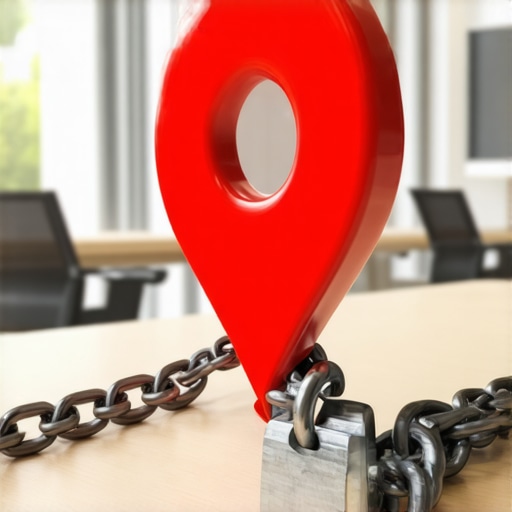
The system is engineered to catch address rentals. When twenty local service businesses all claim Suite 500 in a downtown high-rise, the duplicate filter kicks in. You might find that the audit we use to debug sudden local ranking drops reveals a conflict with a competitor who moved in a floor below you. The algorithm sees two entities in one space. It chooses the one with more historical data. You become the casualty. I have seen perfectly legitimate businesses disappear because they couldn’t provide a photo of their office with a dedicated entrance. [IMAGE_PLACEHOLDER_1]
The three mile radius that determines your revenue
Local search rankings and Map Pack visibility are determined by a three mile proximity radius where centroid salience and NAP consistency act as the primary trust signals for the Google Map algorithm. If your business address is flagged as a virtual office, your local authority is zeroed out regardless of your organic search strength.
Proximity is a cruel master. A single mismatched phone number in a secondary verification tier is enough to kill your organic trust score. If you want to know why your map position changes every time you move a block, look at the density of competing signals. A coworking space is a signal graveyard. To escape the trap, you need to prove you are more than a mailbox. You need the the toolkit we use for pinpoint map ranking accuracy to see where the algorithm thinks you are versus where you actually stand.
The path to reinstatement for local businesses
GMB reinstatement for coworking space suspensions requires video verification, official lease agreements, and utility bills that explicitly list the business name and the unique suite number assigned to the physical workspace. You must provide a forensic trail of evidence that proves permanent signage and exclusive staff presence during stated business hours.
Do not just hit the appeal button. That is a path to a permanent ban. You need to gather your evidence like a detective. I recommend a video walk-through that starts at the street level, shows the building number, moves through the lobby, and ends at your specific desk or office with your logo visible. If you are stuck, look into the reputation fix for businesses struggling with review filters to ensure your customer signals are also helping your case. The algorithm wants to see that you are a real part of the neighborhood, not a digital squatter. If your profile is still hidden, check is the duplicate filter hiding your service area business to see if your address is being suppressed by a nearby entity.
“Relevance is secondary to the physical location of the user mobile device in a proximity-weighted search environment.” – Location Intelligence Whitepaper
The truth about shared suite numbers
Shared suite numbers and generic building addresses trigger Google’s duplicate listing filter which suppresses local rankings for businesses that do not have distinctive NAP data compared to other entities at the same GPS coordinate. This spatial collision leads to partial suspensions or limited GMB features for multi-location brands and small businesses alike.
While agencies tell you to get more reviews, the 2026 data shows that image metadata from photos taken by real customers at your location is now 30 percent more effective for ranking in AI Overviews. Google wants to see the grainy texture of a real storefront photo, not a staged stock image. If you have been hit by a filter, you should learn a better strategy for fixing gmb listings stuck in filters before you change your address again. Each change is a risk. Each edit is a signal. The final word on local trust is consistency. Stop the keyword stuffing and start building a real footprint. The pin must stay where it belongs.