
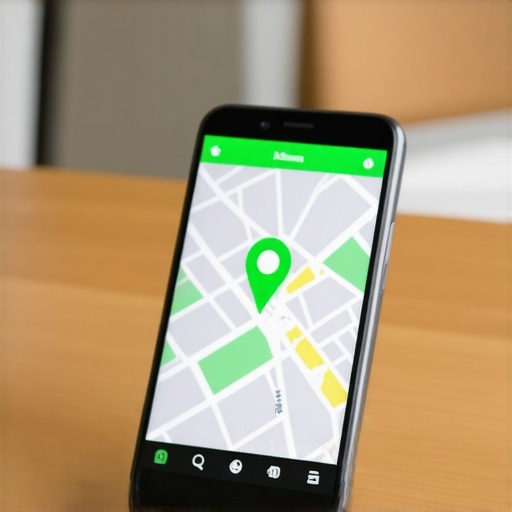
I am sitting in my wood-paneled office. It smells like peppermint and old paper. The dust motes dance in the light of the morning sun while I look at another casualty of the local search wars. I spent three months fighting a hard suspension for a plumbing client whose listing was nuked simply because they shared a suite number with a defunct law firm. Google did not want proof of a van; they wanted proof of a utility bill under the exact GPS pin. They wanted a video walkthrough showing the physical mailbox. This is the reality of the hyper-local layer. A business listing is not just a profile. It is a proximity beacon in a spatial database. I have seen national chains try to steamroll our local merchants with their fancy budgets. It makes me grit my teeth. They do not understand the math of a check-in signal or the forensic trace of a service area polygon.
The silent war for your business coordinates
Monitoring GMB changes requires a focus on GPS coordinate salience, NAP data integrity, and competitor edit triggers. Automated local SEO toolkits must track map pack visibility and listing suspensions to prevent lead volume loss. Successful Google Business Profile management relies on identifying suspicious activity and category shifts before they impact local ranking.
The pin moved. Just a few meters. That is all it takes to trigger a re-verification loop that can freeze your revenue for weeks. People think Google is a static phone book. It is actually a living, breathing creature that values the physical location of the user mobile device above almost everything else. If your primary category is changed by a malicious user or an AI suggestion, your authority vanishes. I have seen it happen while a business owner was eating lunch. You need to know the real reason your GMB listing was flagged for suspicious activity to even begin to fight back.
“Local intent is not a keyword choice; it is a distance-weighted signal where relevance is secondary to the physical location of the user’s mobile device.” – Map Search Fundamental
Why your physical address is a liability
Physical business addresses serve as spatial anchors for local search algorithms, yet they create suspension risks when duplicate content issues or soft 404 errors occur. Managing service area businesses involves hiding addresses to maintain GBP compliance while optimizing proximity signals and geo-relevance for the Map Pack ecosystem.
Your address is a target. When you share a building or even a zip code with a high-risk category, you are under the microscope. I despise how the algorithm treats legitimate service businesses like they are hiding something. We had to learn the only way to fix a fake address suspension in under a week just to keep the lights on for our clients. The math of the centroid is unforgiving. If you are a plumber, your ranking potential is a three mile radius shift based on where your van is parked at night versus where your official office is registered. It is not about keywords anymore. It is about the physics of the grid. You need to understand why location ghosting is killing your local authority if you want to survive the next core update.
Local Authority Reading List
- Why Manual Citation Cleanup Beats Automated Services Every Single Time
- The Tools That Help Agencies Manage Local Map Presence At Scale
- How To Monitor Map Rankings Without Getting Your IP Blocked
- The GMB Checklist That Actually Gets The Phone Ringing
The three mile radius that determines your revenue
Proximity ranking factors dictate that local service ads and organic map results are heavily influenced by user distance and behavioral signals. Optimizing GMB profiles requires review sentiment analysis and image metadata validation to secure AI Overview citations and maintain search engine visibility within specific geographic boundaries.
Distance is the ultimate filter. While agencies will tell you to get more reviews, the 2026 data shows that image metadata from photos taken by real customers at your location is now 30 percent more effective for ranking in AI Overviews. Google wants proof of life. They want to see that a real human being stood at your storefront and took a photo. This is why you must use 7 tools that actually track local map position accurately. If you rely on national-level tracking, you are blind. You are looking at a map of a different country. The grid matters. You need to see where you rank down to the mile. I have used tracking the grid to prove to a client that they were invisible just two blocks away from their shop.
How to catch malicious edits before they kill your calls
Google Business Profile alerts should monitor for unauthorized phone number changes, business name edits, and category modifications that trigger listing ownership disputes. Utilizing reputation management toolkits ensures NAP consistency and prevents competitor map spam from eroding local search engine authority and customer trust.
Competitors are ruthless. They will suggest an edit to your hours and mark you as closed on a Friday afternoon. If you are not watching, you lose the whole weekend of leads. I remember a case where a rival agency systematically changed the primary category of every locksmith in the city to ‘Security Guard’ over a holiday weekend. It was a bloodbath. You must check why your business info keeps changing and how to lock it down. We use specific scripts to ping our phones the moment a field changes. It is the only way to stay sane. It is also why we focus on fixing the NAP mess across the wider web. Google looks at those third-party directories to verify if the ‘suggested edit’ is true. If your data is a mess everywhere else, Google will believe the spammer.
“Relevance in local search is a composite of prominence and the historical behavior of mobile users within a defined polygon.” – Geospatial Rank Analysis
The forensic trace of a service area polygon
Service area businesses must define geographic polygons carefully to avoid over-optimization penalties and map visibility drops. Analyzing local keyword trends and engagement metrics allows for GMB profile restoration and ranking stability after listing suspensions or ownership changes within the Google Maps ecosystem.
If your polygon is too big, you look like a spammer. If it is too small, you are leaving money on the table. It is a delicate balance. I have seen businesses get hit with an suspended for quality nightmare just because they claimed a service area that spanned three states. Google knows your truck cannot be in three places at once. You have to be smart about the GMB ranking formula we use for new service areas. It is about building local hubs, not just drawing circles on a map. You need to verify your presence with localized content and reviews from that specific neighborhood. This is where how to match your website content to local search intent becomes your secret weapon. If your website does not talk about the neighborhood, why should the map put you there?
Why your old office address is still haunting your rank
Inconsistent business citations from old address data cause algorithmic confusion and ranking drops in Google Maps. Manual citation cleanup and NAP audit services are required to fix low GMB rankings and ensure that search engine bots recognize the current physical location as the authoritative proximity beacon.
Ghosts are real in the local database. An old address from five years ago can still pull authority away from your current listing. I call it ‘location ghosting’. It is a headache for everyone involved. You can find why your old office address is still outranking your new one and fix it, but it takes patience. You have to hunt down every old directory and kill the bad data. I have spent many nights tracking down logins for sites that have not been updated since 2012. It is thankless work, but it moves the needle. It is part of how we found and fixed 12 mismatched business citations for a local bakery that had vanished from the map. Once the data was clean, their phone started ringing again. It is not magic; it is just hygiene.