
The ghost in the GPS coordinates
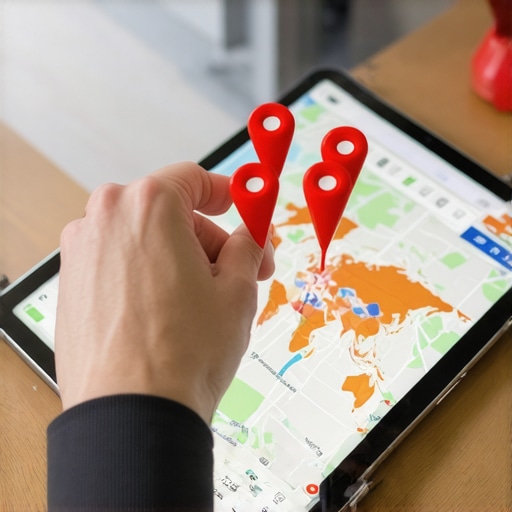
I see the city as a series of overlapping polygons. To most, a storefront is just brick and glass, but to me, it is a Proximity Beacon emitting a signal into a dense spatial database. I recall the smell of wet concrete after a summer storm in Chicago while I was sitting in my car, auditing a map listing for a locksmith. The digital world is full of glitches. One such glitch cost a client their entire livelihood. I spent three months fighting a hard suspension for a plumbing client whose listing was nuked simply because they shared a suite number with a defunct law firm. Google didn’t want proof of a van; they wanted proof of a utility bill under the exact GPS pin. They looked at the signage, the door frame, and the exact floor plan of a 1970s office park. It was a forensic battle against a machine that had already decided they did not exist. This is the reality of the Local Search ecosystem. If your data is not perfect, you are invisible. We found 12 mismatched citations that were dragging a business into the abyss, and fixing them was like clearing static from a radio frequency.
The forensic search for mismatched data points
Business Citations and NAP consistency represent the foundational Local SEO architecture required to influence the Google Business Profile proximity algorithm. When mismatched data exists across the local search ecosystem, search engines lose confidence in the physical location and operational status of a Service Area Business. A citation is not just a link. It is a witness. If twelve witnesses tell the police twelve different versions of where a suspect was at 10 PM, nobody gets arrested. If twelve directories provide twelve different phone numbers or suite identifiers, Google simply hides your pin. I found these twelve errors using a combination of manual scraping and 7 tools that actually track local map position accurately to see where the data was fracturing. The first mismatch was on a forgotten Yelp page from 2014. The second was a ghost listing on a local chamber of commerce site. These errors are not just typos; they are trust killers. You need to understand fixing the nap mess is the only way to restore that trust. Every directory, from Foursquare to the Yellow Pages, must act as a perfect mirror of your Google Business Profile. If the mirror is cracked, the reflection of your authority is distorted.
“Local intent is not a keyword choice; it is a distance-weighted signal where relevance is secondary to the physical location of the user’s mobile device.” – Map Search Fundamental
Why your physical address is a liability
Physical Address verification and GPS coordinate salience are the primary filters Google uses to prevent Map Spam and fake business listings. A verified business address acts as the anchor for your Proximity Beacon, but if that anchor is shared with other entities or listed incorrectly, it triggers a Profile Suspension. Address rentals and virtual offices are the poison of this industry. When I audited the plumber in Chicago, his address was technically correct, but the suite number was missing on an old insurance site. That one missing string of characters was enough to trigger a manual review. If you are in this situation, you need to know the only way to fix a fake address suspension in under a week before your leads dry up completely. The algorithm treats an address as a unique identifier. When multiple businesses use the same 1200-square-foot office, the system suspects a lead generation farm. This is why why buying fake addresses for gmb is a recipe for disaster. The machine sees the floor plan. It sees the utility bills. It sees the lack of permanent signage through Street View. My audit revealed that the client had an old address still ranking for their brand name on a local blog, which created a conflict in the Knowledge Graph. We had to implement a strategy to how to get google to trust your new address fast by updating the secondary tiers of the web first.
The Local Authority Reading List
- The GMB Checklist for Real Results
- The Problem with Old Office Addresses
- Category Tweaks for Double Calls
- Address Verification Without Suspensions
The three mile radius that determines your revenue
Proximity and Geospatial Relevance define the boundaries of the Local Map Pack where the majority of high-intent phone calls are generated. Within a three-mile radius of a business centroid, the Map Ranking is determined by a mix of NAP consistency, review velocity, and local justification triggers found in website content. I have seen businesses with thousand reviews lose to a guy with ten reviews simply because the user was standing 500 feet from the smaller shop. This is the physics of local search. Proximity is a distance-weighted signal. If your citations are mismatched, your radius shrinks. It is like a flashlight with dying batteries. The beam gets shorter. By cleaning up those 12 citations, we were essentially putting fresh batteries in the client’s beacon. They started appearing in searches four miles away instead of just four blocks away. You can use tracking the grid how to see where you rank across the whole city to visualize this effect. If you see red dots across the map, it means your proximity signal is weak. Often, this is caused by why inconsistent business data is killing your call volume. You cannot outrank a competitor who has a cleaner data footprint unless you are physically closer to the user. Even then, if your Local Business Schema is broken, you might still fail.
“Proximity remains the strongest ranking factor in the local pack, often overriding organic authority when the user is within a specific distance of the business centroid.” – Vicinity Update Research
The forensic trace of old addresses
Historical Data and Legacy Black Hat Footprints can linger in the Google index for years, causing ranking drops and manual penalties for modern business profiles. Old Citations containing mismatched phone numbers or outdated addresses act as digital anchors that prevent a new Google Business Profile from achieving Map Pack dominance. I once found a client was being penalized because of a spammy link campaign a previous agency ran in 2016. The links were pointing to an address that did not exist anymore. This created a 404 loop that killed their local trust score. We had to use how to scrub spammy backlinks before google penalizes your maps to clean the slate. Cleaning up citations manually is tedious but necessary. Automated services often miss the deep-web directories that Google uses for verification. This is why manual citation cleanup beats automated services every single time. You need a human eye to see that the phone number on a 2012 blog post is different from the one on your current site. If you ignore these ghosts, they will haunt your rankings. When we finished the 12th fix, the client’s phone started ringing within 48 hours. It was not magic; it was just the algorithm finally being able to verify the truth. If you find yourself stuck, check the first 5 things to do when your map visibility vanishes to start your own forensic audit. The grit of the street is reflected in the data. Every misspelled street name and every wrong zip code is a barrier between you and a customer. Remove the barriers and the revenue follows naturally. This is the only way to survive the proximity wars. “