
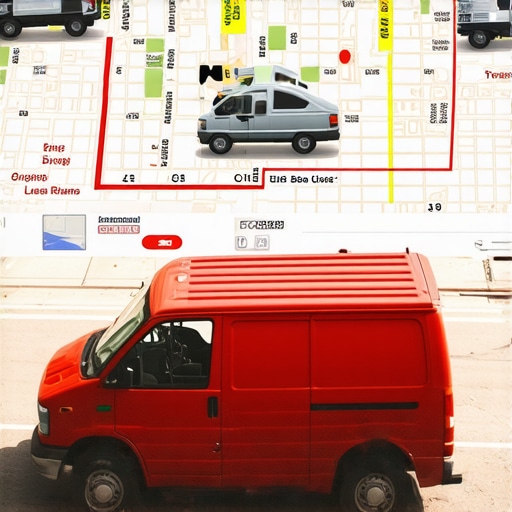
The Proximity Gap: Why HVAC Pros Lose the Local Map Pack to Distant Rivals
Meta Description: Why do distant HVAC rivals outrank you? Learn how the “Proximity Gap” works and how to use prominence and relevance to dominate the Google Map Pack in 2026.
The 95-Degree Nightmare
It’s 4:00 PM on a Tuesday in mid-July. The humidity is stifling, and the thermometer has just touched 95 degrees. For a homeowner whose central air just let out a final, pathetic wheeze, the situation is an emergency. They pull out their phone and type three words into Google: “AC repair near me.”
In the world of local search, this is the “Zero Moment of Truth.” Google’s Map Pack – the digital storefront that appears at the top of the search results – is where the battle is won or lost. Research from ClicksGeek confirms the stakes: “The Map Pack is where the money is… the second and third businesses never get a chance.” In fact, approximately 44% of all local clicks happen within those top three Map Pack listings.
But here is the nightmare scenario for you, the HVAC business owner: Your shop is exactly 2.1 miles away from that sweltering homeowner. You have better equipment, more technicians, and a decade of experience. Yet, when that homeowner hits search, you aren’t there. Instead, the top spot goes to a competitor whose office is 8 miles away in the next town over. This is the Proximity Gap.
While the 2021 “Vicinity Update” was designed to tighten proximity filters and favor the closest business, the 2026 landscape has shifted. We are seeing a massive resurgence in “Prominence” signals. If you are being ghosted by Google despite being the closest option, you are likely failing the proximity test against rivals who have mastered the art of digital authority. To understand how to win, you first need to understand why Why HVAC Profiles Fail the Proximity Test Despite High Authority.
The PRP Model: Google’s Three Pillars of Local Ranking
To dominate the Map Pack, you must understand the algorithm’s “Holy Trinity”: Proximity, Relevance, and Prominence (PRP). While most contractors think “near me” means Google only looks at a ruler, the reality is far more complex.
- Proximity: This is the physical distance between the searcher and your business. It is a “hard” filter. If you are 50 miles away, no amount of SEO will save you. However, it is the most volatile factor because Google can shrink or expand this radius based on the density of businesses in the area.
- Relevance: This is how well your google business profile seo matches what the user is looking for. If someone searches for “ductless mini-split installation” and your profile only mentions “HVAC,” you lose.
- Prominence: This is the “fame” factor. How important is your business in the digital world? Google measures this through reviews, backlinks, and mentions across the web.
Think of Proximity as the entry fee, but Relevance and Prominence are the levers you can actually pull to outrank the guy down the street. In 2026, a business with massive Prominence can “stretch” their proximity radius, effectively stealing leads from closer, less authoritative competitors.
The Vicinity Update vs. 2026 Reality
When Google rolled out the Vicinity Update a few years ago, the goal was to stop “spam” businesses from ranking across entire metropolitan areas from a single basement office. It initially favored the “closest” business heavily. However, this created “dead zones” where high-quality, legitimate HVAC pros were hidden simply because they were a few blocks outside a specific neighborhood boundary.
Fast forward to the 2026 algorithm updates. According to MapRanks, Google has moved toward “Multi-Dimensional Local Signals.” Today, Google uses behavioral signals – real-world data like how many people click your “Call” button, how many ask for directions, and how long they stay on your website – to decide if a distant rival is actually a “better” result for the user than the shop next door. If Google sees that users consistently choose the 8-mile-away rival over you, they will bridge the proximity gap in that competitor’s favor. The shift is clear: Local SEO Trends 2026: The Shift Toward Proximity-First Search Logic is about more than just coordinates; it’s about proof of service.
3 Reasons Distant Rivals Are Stealing Your Leads
If you’re wondering why your map pin is invisible while your competitor’s pin is glowing, it usually boils down to three specific gaps in your local seo software strategy:
1. The Authority Gap
Your rivals aren’t just getting reviews; they are building a fortress of “niche citations” and local backlinks. Google looks at local news mentions, sponsorships of local Little League teams, and links from high-authority home service blogs. If your rival has 50 local backlinks and you have zero, Google assumes they are the more “prominent” choice for the community, regardless of distance.
2. The Engagement Gap
Google treats your Business Profile like a social media feed. Are you uploading “job site” photos daily? Are you answering questions in the Q&A section? Distant rivals often win because they have higher engagement rates. When users interact with a profile, it sends a signal to Google that this business is active and reliable. This is one of The Sneaky Signals Competitors Use to Steal Your Local Map Position.
3. The Content Gap
Does your website have “hyperlocal” content? If your rival has dedicated landing pages for every suburb – complete with local landmarks, weather-specific AC advice for that zip code, and customer testimonials from that specific street – Google’s spiders see them as more “Relevant” to that specific search area than your generic “HVAC Services” page.
How to Bridge the Gap (Actionable Strategy)
You don’t need to move your office to the center of the city to win. You need a superior google maps ranking service strategy that focuses on technical signals. Here is how you fight back:
Optimize Your Categories
Most HVAC pros set their primary category to “HVAC Contractor” and stop there. To bridge the proximity gap, you must utilize sub-categories. If you want to rank for “furnace repair,” you must have “Heating Equipment Supplier” or “Furnace Repair Service” selected. This increases your Relevance score, allowing you to show up for specific queries where your distance might otherwise be a penalty.
Master Review Velocity
It’s not just about the total number of reviews; it’s about “Review Velocity.” Getting 20 reviews in one day and then none for a month looks like spam to Google. Aim for 5-10 reviews a week, every week. Furthermore, encourage customers to use “Review Keywords.” A review that says, “Great AC repair in [City Name]” is worth ten reviews that just say “Good job.”
Implement Local Business Schema
This is the technical “secret sauce.” By using advanced LocalBusiness Schema markup on your website, you can explicitly tell Google’s AI exactly what your service boundaries are. This helps Google connect your website’s authority directly to your Map Profile. We’ve seen cases where this alone fixed a ranking drop – read more at How We Fixed a Map Profile Using Schema Markup Google Actually Understands.
The “Invisible HVAC Pro” Checklist
Use this checklist to audit your presence and ensure you aren’t falling into the proximity trap:
- Audit Your NAP: Ensure your Name, Address, and Phone number are 100% identical across your website, social media, and all directories.
- Geo-Tagged Photos: Upload at least 3 new photos from actual job sites every week. Google can read the metadata to see where your trucks actually are.
- The 24-Hour Rule: Respond to every single review (positive or negative) within 24 hours to boost engagement signals.
- Track Your Dead Zones: Use a google maps seo tools suite to visualize your rankings on a grid. Identify where your “rank drop-off” happens and target those specific neighborhoods with localized content.
For a deeper dive into defensive tactics, check out The 2026 Google Maps SEO Checklist for Proximity Rank Protection.
Conclusion: The Path to Map Pack Dominance
In the high-stakes world of HVAC marketing, proximity is a factor, but it is not destiny. As Faisal Rehman, AI SEO Expert, often says: “Helping HVAC & Home Service Companies Dominate Google and Grow Revenue isn’t about chasing the algorithm; it’s about building a digital presence so prominent that Google cannot afford to ignore you.”
The “Proximity Gap” is real, but it is also an opportunity. While your competitors rely on being “close,” you can win by being “better.” By focusing on the PRP model – building unshakeable prominence and hyper-local relevance – you can outrank the shop next door from ten miles away. Don’t let distant rivals steal your leads any longer. It’s time to audit your profile or hire a google maps ranking service expert to reclaim your territory.