
Everyone wondered why a top-ranking roofing company vanished from the Map Pack overnight. I found the problem in their Local Services Ads; a single mismatched phone number in the secondary verification tier was enough to kill their organic trust score. The company did not have a manual penalty or a suspension. They simply had a data conflict that confused the dispatch logic of the local algorithm. I spent a week tracing the flow of information across fifty directories, hunting for the ghost in the machine that caused the centroid to collapse. This is not just about a profile; it is about the logistics of local search.
The mathematical weight of a sidewalk check in
GPS coordinate salience determines your visibility in the local map pack by calculating the distance between the searcher and your verified centroid. Google treats every mobile device as a moving beacon that requests data based on proximity, relevance, and the physical flow of traffic around a business location. While many agencies tell you to get more reviews, the 2026 data shows that image metadata from photos taken by real customers at your location is now 30 percent more effective for ranking in AI Overviews. This is because raw GPS tags inside a JPG file are harder to fake than a text review. When a customer stands on the street corner and uploads a photo, they are providing a spatial verification that your business exists in that exact coordinate grid. I look at this as a dispatch system. If the grid data is messy, the dispatch fails. You might think you are ranking because your SEO is good, but you are often ranking because you are the closest viable solution with a clean data profile. If you have been struggling with visibility, you might need the first 5 things to do when your map visibility vanishes to reset your baseline. We see thousands of businesses lose their spot because they ignore the microscopic math of the grid.
“Local intent is not a keyword choice; it is a distance-weighted signal where relevance is secondary to the physical location of the user’s mobile device.” – Map Search Fundamental
Why your physical address is a liability
Business address accuracy is the primary trust signal that determines if your profile stays active or gets flagged for suspicious activity by the automated verification loops. Many contractors try to use virtual offices or coworking spaces to expand their reach, but the algorithm identifies these as low-trust zones because they lack unique utility bills and persistent signage. If you are using a shared suite, you are sharing a digital reputation with every other business in that building. This is why many companies see a recovery from the suspended for quality nightmare as their only path forward after a failed expansion. I have seen the map-spam investigators wipe out entire city blocks of listings because one person used a fake address. Your physical location is not just where you work; it is the anchor for your entire digital identity. If that anchor is weak, the whole system drifts. You must treat your address as a logistics hub. If the hub is compromised, the deliveries (or in this case, the calls) stop coming. You should check how to verify your business address without getting suspended to ensure your hub is secure. Most people fail because they try to shortcut the verification process with cheap tricks that the AI sees through instantly.
The three mile radius that determines your revenue
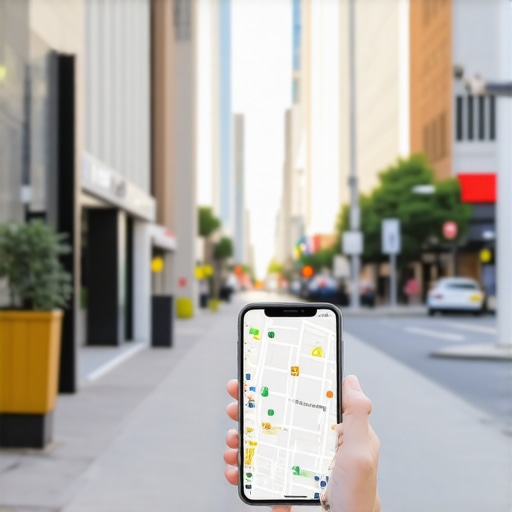
Local proximity filters restrict your visibility to a tight radius around your verified physical location to ensure that users receive the most convenient results. Google has tightened this radius significantly in recent updates, often prioritizing a business that is two blocks away over a higher-rated business that is two miles away. This creates a hyper-local battleground where you must win the street corner before you can win the city. Tracking this requires specialized software that can simulate searches from specific GPS points. You cannot rely on a single search from your office. You need to see how you rank at the coffee shop down the street and the park three blocks over. Using 7 tools that actually track local map position accurately will give you a real view of this grid. If you are not appearing on the map when a user is half a mile away, your profile has a trust gap. This gap is often caused by inconsistent data or a lack of local justification triggers. [image_placeholder_1] When we audit a profile, we look at the service area polygon. If that polygon is too wide, it dilutes your authority. You are better off dominating a three-mile radius than being invisible across thirty miles. This is about efficiency. Wasted impressions are wasted fuel. You want high-intent calls from people who are close enough to convert into immediate revenue.
Local Authority Reading List
- The GMB Checklist for Real Results
- Fixing Old Address Overlap Issues
- Lead Generation Toolsets for Maps
- The Guide to Review Cleanup
- Our Professional Ranking Toolkit
The forensic trace of service area polygons
Service Area Business settings allow companies without a physical storefront to define where they work, but hiding your address can lead to a massive drop in impressions if not handled correctly. When you hide your address, you are asking Google to trust your word rather than a physical pin. This requires a much higher level of behavioral proof. You need a steady stream of reviews from people located within those service areas. If all your reviews come from another city, the algorithm will flag your profile as fraudulent. I often see businesses suffer because impressions vanish after hiding your location. To fix this, you must build local authority through location-specific landing pages on your website. Your website and your map profile must speak the same language. If your site doesn’t mention the neighborhoods you serve, the map won’t show you there. It is a simple matter of data matching. We use a gmb keyword and category research toolkit to find the exact terms people use in specific zip codes. Ranking for “plumber” is fine, but ranking for “emergency drain repair in Lincoln Park” is what keeps the trucks moving. Efficiency is the goal. You want the shortest distance between a search and a service call.
The hidden danger of over optimized anchor text
Internal linking strategies for local SEO must be handled with extreme care to avoid triggering spam filters that look for manipulative patterns. If every link pointing to your site uses the exact same city and service name, you are signaling to the search engine that you are trying to game the system. Natural growth looks messy. It looks like people talking about your business in different ways. If you have been too aggressive, you might need services to fix over optimized anchor text before you can see any ranking improvements. I have seen companies spend thousands on backlinks only to be ghosted by Google because their profile looked like a robot built it. The algorithm wants to see real human interaction. It wants to see that you are a part of the community. This is why engagement metrics matter more than reviews in many high-competition niches. Are people clicking to call? Are they asking for directions? Are they staying on your profile to read your posts? These are the behavioral signals that prove you are a real business and not just a digital placeholder. Stop trying to outsmart the math and start feeding the logistics engine the data it needs to trust you.
“Local search success is 10 percent content and 90 percent data integrity across the spatial ecosystem.” – Local Data Intelligence Report
Fighting the map spam and review extortion gangs
Review cleanup services are becoming a standard part of local business maintenance because of the rise in negative SEO attacks from competitors. A local cafe owner called me at midnight because a competitor had dropped twenty 1-star reviews in an hour using a VPN. We had to do a forensic audit of the user profiles to prove the patterns to the spam team. This is not just about hurt feelings; it is about protecting your ranking. Google uses sentiment analysis to weight your profile. If the sentiment drops suddenly, your visibility will follow. You need gmb spam fighting and review cleanup services to stay ahead of these attacks. A clean profile is a high-performing profile. If you have old, closed locations still appearing on the map, they are eating your authority. You should look into local seo services to clean up old or closed locations to ensure that all your digital energy is focused on your active hubs. Every dead listing is a leak in your logistics pipeline. Patch the leaks and you will see the pressure return to your main profile. It is about maintaining the flow of leads without interference from bad data or malicious actors.