
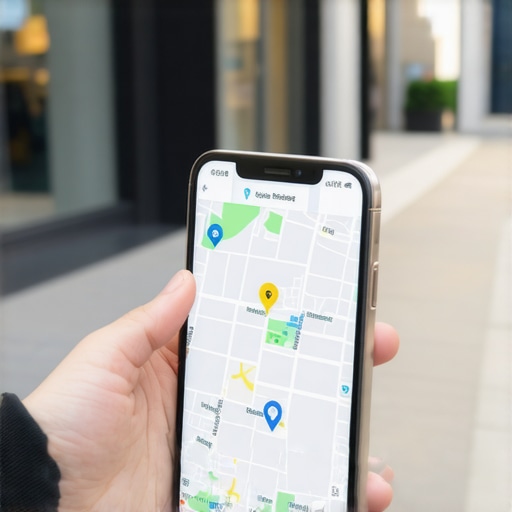
The screen flickered with a cold, blue light as I stared at the ranking grid for a plumbing client in downtown Chicago. It was gone. Not just a drop from the first to the second position, but a total erasure from the local landscape. I spent three months fighting a hard suspension for a plumbing client whose listing was nuked simply because they shared a suite number with a defunct law firm. Google didn’t want proof of a van; they wanted proof of a utility bill under the exact GPS pin, a video walk-through of the physical office, and a lease that predated their digital existence. This is the reality of the modern local ecosystem. When your visibility vanishes, it is rarely a coincidence. It is usually a algorithmic correction or a manual strike triggered by a proximity anomaly. You must act with forensic precision to reclaim your digital territory.
The night the phone stopped ringing
Google Business Profile suspensions, ranking collapses, and map pack disappearances usually stem from a lack of physical proof or a mismatch in location data. If your phone stopped ringing, the first step is determining if you have a soft suspension, a hard suspension, or a simple ranking drop caused by a competitor. While many think a drop is a penalty, it is often a case of location ghosting where Google loses trust in your physical coordinate. You need to investigate the dashboard for any red banners or policy notifications immediately. Understanding why your business suddenly vanished from google maps and how to reappear is the difference between a one-day fix and a six-month revenue drought. Do not make any hasty edits to your business name or primary category until you have diagnosed the root cause. A single wrong character in your address field can trigger a secondary verification loop that freezes your lead flow for weeks.
“Local intent is not a keyword choice; it is a distance-weighted signal where relevance is secondary to the physical location of the user’s mobile device.” – Map Search Fundamental
The ghost in the GPS coordinates
Centroid proximity, GPS salience, and user-to-business distance are the mathematical foundations of the Map Pack. Google does not care about your beautiful website if it cannot verify that your business actually occupies the space it claims. I have seen businesses vanish because their pin was moved ten feet to the left into a public park. This often happens when businesses use a virtual office or coworking space. If you are struggling with these specific gmb issues, you likely need why buying fake addresses for gmb is a recipe for disaster to understand the risk profile you have inherited. Google uses WiFi SSID signals and mobile device pings to verify if humans are actually working at your location. If the signal data shows fifty different businesses operating out of one tiny suite, the trust score for that entire centroid collapses. You need to move beyond simple software and use a google maps ranking toolkit for local businesses that actually tracks the physical verification signals of your competitors.
Forensic audit of your primary categories
Primary category selection, service area polygons, and local justification triggers dictate which searches you appear for. If your visibility vanished, check if your primary category was changed by a rogue user suggestion or an automated update. Many times, a competitor will suggest an edit to your profile, moving you from ‘Plumber’ to ‘Water Heater Repair Service,’ which effectively hides you from 80 percent of your previous traffic. You need to learn the specific category tweaks that doubled our phone calls to ensure your profile is optimized for maximum reach. Do not over-categorize. Adding too many secondary categories dilutes your topical authority and can make you look like a ‘generalist’ in the eyes of an algorithm that favors ‘specialists’ within a tight three-mile radius. Use how to rebuild local authority when your category strategy fails as a guide for resetting your profile baseline.
Local Authority Reading List
- The GMB Ranking Formula We Use For New Service Areas
- Getting Your GMB Profile Back After a Manual Review
- How to Scrub Spammy Backlinks Before Google Penalizes Your Maps
- The Step-by-Step Recovery Plan for a Sudden Ranking Collapse
Cleaning the debris of virtual office ghosts
Virtual office penalties, coworking space filters, and residential address flags are the leading causes of modern profile suspensions. If you are operating from a Regus or WeWork, you are on borrowed time. Google prefers physical storefronts with permanent signage. If your visibility died, check if your address was flagged as part of a ‘spam neighborhood.’ You can use recovering from the suspended for quality nightmare to navigate the appeal process. Often, you must provide a video of your staff actually working in the office, showing the street sign and the entrance. If you cannot provide this, you may need to switch to a service-area business model. This requires a specific strategy, such as the ranking repair guide for businesses switching to service area only, to maintain your rankings while hiding your home address from the public. Google is becoming increasingly aggressive about verifying the ‘human element’ of a local listing.
The tactical strike against competitor map spam
Competitor spam fighting, keyword-stuffed business names, and fake review detection are offensive tactics used to reclaim your rank. If your visibility vanished, it might not be your fault; it might be because a competitor is cheating. They might have added ten fake listings around your shop to push you out of the 3-pack. You must perform a the simple audit that finds why your competitors are outranking you to identify these fake pins. Once identified, report them using the Redressal Form. Fighting back is a vital part of local maintenance. If they have keyword-stuffed their name, you can use local seo services to normalize rankings after keyword stuffed business name edit logic to force Google to revert their name to the legal entity, instantly dropping them in the rankings and restoring your rightful place. I have seen entire markets shift in twenty-four hours just by cleaning up three fake listings in a high-density area.
The three mile radius that determines your revenue
Local search proximity, user intent modeling, and behavioral engagement signals determine if you stay in the Map Pack or fade into the second page. Google tracks how many people click ‘Directions’ or ‘Call’ on your profile compared to your neighbors. If your engagement drops, your visibility will follow. You need the engagement metrics that matter more than reviews to understand that your rank is a living, breathing score. It is not a set-it-and-forget-it game. The math of the proximity engine is brutal. If you are located on the edge of a city, your visibility will naturally be lower than a business at the city center, unless you have higher authority. You can build this authority by [finding high-quality backlinks for your local business](https://morecallsfrommaps.com/how-to-find-high-quality-backlinks-for-your-local-business) that are geographically relevant. Links from a local chamber of commerce or a neighborhood blog are worth more than a hundred generic global links when it comes to moving your map pin closer to the user.
“Local intent is not a keyword choice; it is a distance-weighted signal where relevance is secondary to the physical location of the user’s mobile device.” – Map Search Fundamental
Rebuilding trust through citation cleansing
NAP consistency, aggregator data hygiene, and citation cleanup services are the final pillars of recovery. If your old business address is still floating around on Yelp or Yellow Pages, it creates a ‘data conflict’ that confuses the Google algorithm. This confusion leads to a loss of trust and a subsequent ranking drop. You must learn how to clean up citation data that is haunting your map ranking to ensure every digital mention of your business is identical. Manually scrubbing this data is time-consuming but effective. Use why manual citation cleanup beats automated services every single time as your manifesto for this process. Automating this often leads to ‘ghost citations’ that reappear months later, causing your rankings to vanish all over again. You need a clean, verified slate to build back the authority required to dominate the high-value map searches in your region.