
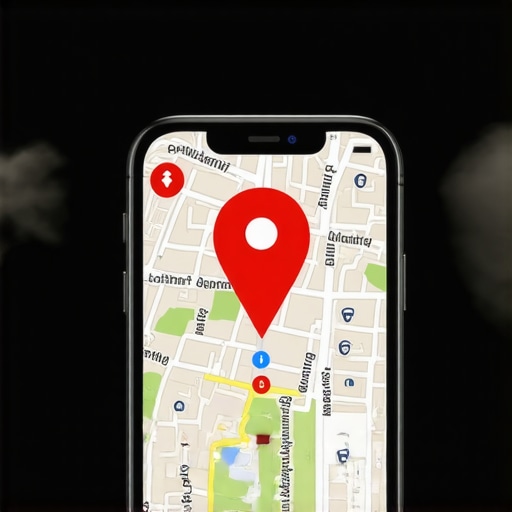
The smell of wet concrete always reminds me of a job site where things have gone sideways. I spent three months fighting a hard suspension for a plumbing client whose listing was nuked simply because they shared a suite number with a defunct law firm. Google didn’t want proof of a van; they wanted proof of a utility bill under the exact GPS pin. This was not a simple clerical error. It was a proximity war. I see the glitches in the storefront data every day. When a business tries to rent a virtual office or buy a fake address for a Google Business Profile, they are not just taking a shortcut. They are planting a digital bomb in their own foundation. Local search is not about keywords anymore. It is about the physical reality of where you stand. I have watched hundreds of listings vanish because the owner thought they could trick the centroid logic of a major metropolitan area.
The ghost in the GPS coordinates
Buying fake addresses for a Google Business Profile is a direct violation of terms that leads to permanent account suspension and loss of lead flow. Google uses WiFi triangulation, GPS history, and third party municipal data to verify the physical proximity of a local service provider. If your service area business lacks a utility bill or lease agreement at the verified coordinates, the Map Pack algorithm will flag the listing as fraudulent. I look at map pins the way a street photographer looks at a lens. If the focus is off by a millimeter, the whole image is ruined. Google sees these address rentals as noise. They want the truth. When you try to fix a fake address suspension, you realize quickly that the algorithm has a long memory. It remembers the previous occupants. It knows if that suite number belongs to a Regus office or a mailbox store. The system is designed to protect the user experience from ghost businesses. If you are not there, you do not exist in the eyes of the machine. This is why your physical address is the most important local seo signal you possess.
The three mile radius that determines your revenue
Proximity is the primary ranking factor in the Map Pack because mobile search intent is tied to the physical location of the user. Google creates a distance-weighted relevance score that prioritizes businesses within a three mile radius of the searcher’s mobile device. This hyper-local proximity logic ensures that Point of Sale data and local justification triggers remain accurate for the end user. You can have ten thousand reviews. It will not matter if you are twenty miles away and your competitor is two blocks away. The math is cold. The algorithm measures the distance between the user and your verified pin. If that pin is a fake address in a downtown skyscraper while you work from a garage in the suburbs, the mismatch triggers a red flag. Most people do not understand that the proximity gap is why hvac pros lose to smaller, closer rivals. It is about the density of the signal. I have seen companies try to use a specific ranking formula to bypass this, but if the core location is a lie, the formula breaks.
“Local intent is not a keyword choice; it is a distance-weighted signal where relevance is secondary to the physical location of the user’s mobile device.” – Map Search Fundamental
Local Authority Reading List
- The Google Business Profile Strategy for 2026
- Common Address Verification Mistakes
- Tools for Accurate Local Data
- The Secret to Neighborhood Dominance
- How to Build Address Trust Fast
Why your physical address is a liability
A fake address acts as a permanent liability because it creates a footprint of inconsistent NAP data across the web. When Google crawlers find your business name and phone number attached to a coworking space or virtual mailbox, they devalue your local trust score. This mismatched business data leads to profile errors and ranking drops that are expensive to recover from in a competitive market. I have seen agencies sell these addresses like they are magic beans. They are not. They are anchors. You end up needing services to fix mismatched business address and phone numbers across dozens of directories. The cleanup takes months. It is much harder to restore a map listing once Google has labeled you a spammer. They look for the forensic trace of your real location. They check the WiFi SSID names around your suspected office. If the data does not match, you are gone. The cost of effective map recovery far exceeds the cost of just doing it right the first time. You need to audit your profile for technical errors before the suspension hits.
The forensic evidence for a manual review
Manual reviewers at Google look for photos of permanent signage and official government documents to verify a business location. During a reinstatement appeal, you must provide utility bills, business licenses, and unaltered photos of the storefront from the street level. Fake addresses fail this forensic audit because they lack permanent branding and physical presence at the claimed suite number. I once had a client who tried to use a Photoshop job on a sign. The reviewer caught it in seconds. They look for the shadows. They look for the reflection in the window. It is about the granular details. You can use map tracking software to see the moment your listing is flagged. Usually, it starts with a soft suspension where your edits are rejected. Then comes the hard suspension. If you are getting your profile back after a manual review, you need a clean slate. You need to clean up citation data that points to the old, fake address. If you do not, the ghost of that address will haunt your rankings for years. Google wants to see a real door with a real handle.
“Verification is the process of mapping the digital entity to a physical point of entry in the real world.” – Location Intelligence Whitepaper
The toolkit for detecting local map dominance
High quality local SEO tools track proximity grids to show how a business ranks across different GPS coordinates in a city. Using spatial data visualization, you can identify ranking gaps and competitor strength based on real time map position. These tools to track and improve rankings are essential for service area businesses that need to monitor algorithm changes. Many people use tools that actually track local map position, but they ignore the data. They see a drop and think it is a penalty. Often, it is just a competitor moving their pin or improving their engagement metrics. You have to be careful with imposter tools that give you stale data. I prefer the toolkit that agencies trust because it updates more frequently. If you are stuck, you might need a step by step audit to find the leak. Sometimes the problem is not the address. Sometimes it is a broken redirect killing your authority. I have seen dental practices outrank national chains simply by having better localized content. They did not need fake addresses. They just needed better data.
Negative SEO and the review extortion cycle
Fake addresses make a business an easy target for negative SEO attacks and review extortion because the listing lacks a verified physical foundation. Competitors can easily report a fake location as non-existent using the suggest an edit feature on Google Maps. This vulnerability leads to listing removals and reputation damage that requires specialized recovery services. I have seen the patterns. A competitor drops twenty 1-star reviews. They know you cannot fight back because your address is fake. You are already hiding. This is why you need emergency map listing recovery tools. You need to be able to delete spam links and scrub toxic backlinks. If your profile has inconsistent opening hours or a history of address changes, you are a target. Protecting your business means having a real location. It means having safe review growth. You cannot build a castle on a swamp. You need a foundation of real concrete. Not the wet kind that indicates a job gone wrong, but the solid kind that holds a building up for decades. Stop looking for shortcuts. Start looking for the pin that represents your actual work.