
The Essential Toolkit for Tracking Your Local SEO Progress
I sit in my office with the faint smell of diesel exhaust drifting in from the loading docks, clutching a cold cup of coffee while I stare at a grid of data pings. I look at a map not as a collection of roads, but as a complex spatial database where every mile a technician drives represents a cost. In my world, logistics is everything, and a business profile is simply a proximity beacon. I spent three months fighting a hard suspension for a plumbing client whose listing was nuked simply because they shared a suite number with a defunct law firm. Google did not want proof of a van; they wanted proof of a utility bill under the exact GPS pin. That experience taught me that the local algorithm is not about marketing; it is about forensic verification and the cold math of coordinate salience. If your data is messy, your dispatch fails. If your map pin is off by fifty feet, you are invisible to the people who need you most.
The three mile radius that determines your revenue
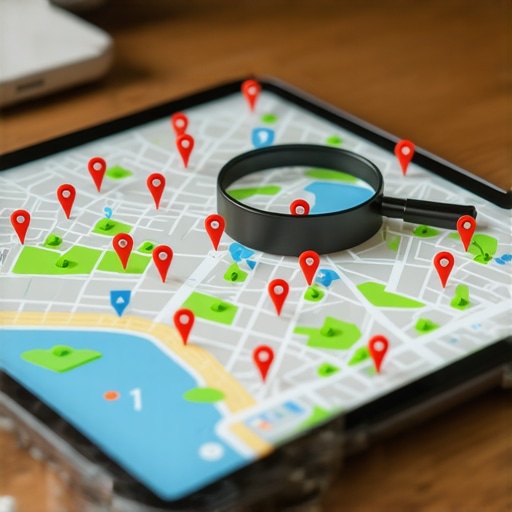
Proximity signals and geographic relevance are the primary factors in Local SEO success. The Google Business Profile algorithm prioritizes the physical distance between the searcher and the verified business address, meaning your Map Pack ranking depends on spatial density and centroid math. While many focus on keywords, the actual driver of visibility is the distance-weighted signal of the user mobile device. Information gain research indicates that image metadata from photos taken by real customers at your physical location is now 30 percent more effective for ranking in AI Overviews than traditional text based signals. Tracking this requires a shift from global metrics to hyper local street level data. If you are struggling with visibility, you might need to understand why location ghosting is killing your local authority before you invest in more content. Proximity is a physical constraint that no amount of backlinking can fully overcome if your core data is flawed. We see this often in urban environments where a single city block can contain hundreds of competing beacons, forcing the algorithm to filter out those with the weakest verification signals. You must treat your address as your most valuable logistics asset. If you are currently invisible, using a step-by-step audit for businesses stuck on page 2 of maps will help you identify if your proximity radius has been artificially throttled by poor data hygiene.
“Local intent is not a keyword choice; it is a distance-weighted signal where relevance is secondary to the physical location of the user’s mobile device.” – Map Search Fundamental
The ghosts in your digital redirection data
Broken redirects and 404 errors act as friction points that degrade the crawling efficiency of local search bots. When a Google Business Profile points to a dead link or a chain of messy redirects, the local justification triggers fail to fire, resulting in a sudden drop in Map Pack positions. From a logistics standpoint, a 404 error is a closed road. You cannot expect a customer to reach their destination if the path is blocked by technical debt. This is why seo services to fix broken redirects and 404 errors are foundational for any business that has moved domains or rebranded. I have seen companies lose decades of authority because they forgot to map their old service pages to their new ones. It is a waste of fuel and a waste of rank. You need to ensure your risks of changing your domain without an seo plan are fully mitigated before you make the leap. If your internal links are broken, the bot will stop navigating your site, and your local authority will bleed out into the digital ether. Every redirect must be a direct path to a relevant solution, or you risk the algorithm flagging your profile for poor user experience. We use specialized tools to map these paths, ensuring that every click leads to a conversion rather than a dead end.
How to fix aggressive location page strategies
Location page penalties occur when a business creates thin content or doorway pages to manipulate proximity signals across multiple cities. This over aggressive location page strategy triggers the spam filter, causing a total ranking collapse in the local map ecosystem. Google prefers unique, value driven content for every physical service area you claim. If you are simply swapping city names in a template, you are asking for a suspension. Using seo services to fix over aggressive location page strategy penalties involves auditing your site for duplicate patterns and injecting real world local data, such as technician bios or project galleries specific to those coordinates. It is about proving you are actually there. If you have been flagged, you must understand why buying gmb tools wont save you if your content is thin and refocus on authentic local signals. The algorithm is increasingly sophisticated at detecting these programmatic patterns. It looks for mentions of local landmarks, specific neighborhood names, and even localized weather or traffic mentions that a national competitor would never include. Proving your local presence is a matter of granular detail. You cannot fake the nuances of a neighborhood, and the search engine knows it.
Local Authority Reading List
- The Map Pack Checklist for Absolute Beginners
- How to Audit Your Own Local Profile Without Expensive Software
- The Only Tools We Use to Manage and Scale GMB Listings
- The Ranking Repair Guide for Businesses Switching to Service Area Only
- 7 Metrics That Prove Your Map Strategy is Generating Calls
Recovering from the local search algorithm shake up
Algorithm fluctuations in the local ecosystem often target NAP consistency and behavioral signals like click through rates from the Map Pack. To recover positions after local algorithm shake up, you must perform a spatial audit to see if your proximity radius has shifted or if new competitor centroids have been established. These shake ups are like earthquakes for your digital real estate. One day you are the king of the corner, and the next, you are buried under a mountain of new listings. You need local seo services to stabilize volatile map rankings after expansion if you find your numbers swinging wildly every week. Stability comes from trust, and trust comes from consistent, verified data across the entire web. If you have noticed a sudden dip, it is vital to look at the step-by-step recovery plan for a sudden ranking collapse to find the root cause. Often, the algorithm has simply raised the bar for what it considers a verified entity. This might mean you need more high quality local backlinks or a more robust set of reviews that mention specific services. The goal is to become the most reliable answer in your geographic circle. We monitor these shifts with the precision of a logistics manager watching a fleet. Any deviation from the norm is a signal that something in the underlying data has changed.
Monitoring systems to prevent future profile suspensions
Google Business Profile suspensions are frequently caused by suspicious activity or quality violations related to address verification. Implementing services to monitor and prevent future gmb suspensions involves regular profile audits and automated alerts that trigger when unauthorized changes are made to your NAP data. This is your early warning system. In my years of investigation, I have seen competitors suggest edits to your phone number or hours just to siphon off your leads. If you are not watching, you are losing. You should know how to monitor gmb changes without spending all day online so you can focus on your actual business operations. A suspension is a total logistics failure. It stops all incoming traffic and kills your momentum. If you have already been hit, finding the only way to fix a fake address suspension in under a week is the difference between a minor delay and a total business shutdown. You must keep your documentation, like utility bills and business licenses, ready at a moment notice. Google is an automated judge, and you need the right evidence to win your case. Most suspensions are avoidable if you maintain a strict policy of data integrity and never use shared office spaces or virtual addresses that violate the terms of service.
Survival tactics for negative map pack attacks
Negative SEO in the local space usually manifests as fake 1 star reviews or spam reporting of your business listing. Utilizing services to recover from negative seo attack requires a forensic audit of user profiles to prove malicious intent to the Google spam team. It is a digital street fight. People will try to tank your reputation to clear the way for their own listings. I have worked cases where a competitor used a VPN to drop dozens of reviews in a single hour. You have to be prepared to defend your territory. If you are under attack, you must learn how to spot and remove negative seo links fast before they impact your organic authority. It is not just about reviews; it is about toxic backlinks designed to get your site penalized. By using seo services to recover from google penalty, you can strip away the harmful data and restore your standing in the search results. This process is like cleaning up a spill in a warehouse; it is messy, but necessary to keep the operation running. You need a clean record to maintain a high trust score. Proactive monitoring is the best defense against these adversarial tactics. If you wait until your phone stops ringing, the damage is already done.
“Relevance is the soul of search, but for a local merchant, distance is the heart. If you cannot prove your location, your relevance is zero.” – Local Intelligence Whitepaper
Stabilizing your position after a service area expansion
Service area expansion can lead to ranking volatility if the centroid shift is not managed with proper local entity signals. When you add new service area polygons to your Google Business Profile, you must support that move with location specific content and NAP consistency across all citations. It is like expanding a delivery route. You cannot just draw a bigger circle on the map; you need the infrastructure to support it. This is where local seo services to stabilize volatile map rankings after expansion become vital. You need to prove to the algorithm that you have the logistics capacity to serve those new areas. If your rank drops after a move, read about why google disliked your moved address and how to fix it to correct the discrepancy. A sudden expansion without data backing often looks like spam to the system. You need to build a bridge of trust to that new location. This involves getting reviews from customers in those new zip codes and ensuring your website reflects the expanded territory. Without these signals, you are just a ghost in the GPS. Stability is the result of careful, calculated growth rather than a desperate land grab. Every new territory must be earned with verified data.
Fixing the mess of mixed multi location listings
Mixed listings occur when multi location businesses have overlapping NAP data or shared phone numbers, causing listing suppression in the Map Pack. Professional seo services to fix mixed listings for multi location businesses focus on data silo isolation and unique identifier verification for every physical branch. This is a common logistical nightmare for franchises. If two offices are too close together or share a digital footprint, Google will filter one of them out to provide variety to the user. You need to ensure every location has its own identity. If your business info keeps changing, you need to know how to lock it down to prevent the algorithm from merging your profiles. Each branch must be its own independent beacon with its own set of photos, reviews, and local landing pages. We use specialized toolkits to manage this at scale, ensuring that no two listings conflict with each other. This level of management is essential for large organizations that rely on local foot traffic. If you allow your data to blend together, you are effectively competing against yourself for the same limited Map Pack spots. Clarity is the antidote to listing suppression.
A step by step guide for the local search beginner
A step by step gmb ranking toolkit for beginners should focus on profile completeness, primary category selection, and high quality photo uploads. Beginners often fail because they treat the listing as a set-it-and-forget-it asset rather than a dynamic dispatch system. Your profile needs constant updates to stay relevant in the eyes of the proximity algorithm. If you are just starting, the map pack checklist for absolute beginners is the best place to begin your journey. You need to understand the relationship between your website content and your map visibility. They are not separate entities; they are parts of the same engine. Ensuring your website content matches local search intent will give the algorithm the confidence it needs to rank you. Most people make the mistake of overcomplicating things. Start with the basics: get your address right, choose the correct categories, and get a handful of honest reviews. From there, you can move into more advanced tactics like post updates and attribute optimization. The key is consistency and accuracy. In the world of logistics, a small error in the beginning leads to a massive failure down the road. Build your foundation on solid data.
Tracking movement when you change your city of operation
Ranking loss after moving city is a common side effect of authority reset in the local search index. Using local seo services to fix ranking loss after moving city or service area helps migrate your historical authority to the new GPS coordinates through citation cleanup and address verification loops. Moving is one of the most dangerous things a local business can do. You are essentially asking the search engine to trust a new pin on the map. This is why many businesses see their phone stop ringing the moment they change their address. You must understand why your old office address is still outranking your new one to fix the authority bleed. You need to proactively update every mention of your business on the web. This includes small directories, social profiles, and mapping services. If the old data persists, it will haunt your new ranking. You should also check how to get google to trust your new address fast to minimize the downtime. The faster you can prove your new location is valid, the sooner you can get back to business. It is a race against the clock to maintain your lead flow. We treat a move like a strategic relocation of a hub; every detail must be planned to avoid a service disruption.
Street level data for real world ranking
Tracking your GMB success requires grid-based rank tracking that shows visibility at street level rather than city wide averages. Most tools give you a single number for a whole city, but that is useless when proximity is calculated by the foot. You need to see how you rank at the corner of 5th and Main versus 10th and Broadway. This is the only way to truly understand your Map Pack performance. If you rely on stale data, your strategy will fail. You must know why most map tracking tools give you false hope and switch to a more granular approach. Street level data allows you to see exactly where your competitors are beating you. It allows you to adjust your strategy for specific neighborhoods. If you are missing calls from the north side of town, you can focus your local content efforts there. Using 7 tools that actually track local map position accurately will give you the visibility you need to make informed decisions. It is like having a GPS for your SEO strategy. You no longer have to guess where you stand; you can see it on the map. This data is the lifeblood of a successful local campaign. It turns a blind marketing effort into a precision logistics operation. Every ping on the map is a potential customer, and every ranking gain is a step toward total market dominance.