
The geographic weight of words in a proximity search
To handle multiple languages in a single local listing, you must prioritize the primary language of your specific region while using field-level translations in your website metadata and business descriptions. This prevents the algorithm from misinterpreting your physical location or service intent. Most businesses fail because they create a linguistic mess that triggers a proximity filter conflict, making the listing invisible to everyone.
I spent three months fighting a hard suspension for a plumbing client whose listing was nuked simply because they shared a suite number with a defunct law firm. Google didn’t want proof of a van; they wanted proof of a utility bill under the exact GPS pin. That experience taught me that the map pack does not care about your intentions. It cares about cold, hard data. When you mix languages without a strategy, you are essentially telling the machine that your business has no clear identity. I remember sitting in my office, the air smelling of peppermint and old paper, staring at the screen as the client’s revenue vanished because of a simple data mismatch. It was a war of documentation.
The silent danger of linguistic data mismatch
Local search is not a flat game of keywords anymore. It is a distance-weighted signal where the language on your profile acts as a beacon for the user mobile device settings. If you serve a bilingual community, you cannot just slap two languages into the name field. That is a direct violation of the terms of service and a fast track to a suspension. The machine looks for a specific forensic trace of authority. When the browser language of a user does not match any signal on your profile, you lose the justification trigger. These triggers are the small snippets of text that appear under your listing saying ‘Their website mentions…’ or ‘A review mentions…’.
“Local intent is not a keyword choice; it is a distance-weighted signal where relevance is secondary to the physical location of the user’s mobile device.” – Map Search Fundamental
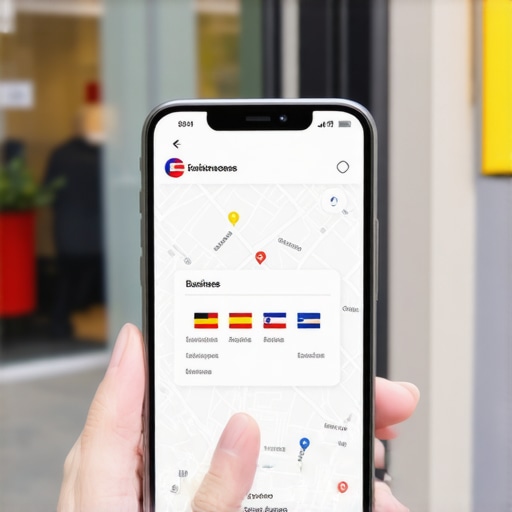
The math of a three mile radius shift is brutal. If your profile is set to English but you are in a neighborhood where sixty percent of searches happen in Spanish, your proximity beacon is weak. You need to use the business description and the services section to weave in secondary languages naturally. Avoid keyword stuffing. Instead, focus on how a human would actually search. If you are struggling with a fix for map listings with mismatched language data, you must understand that the secondary signals are what bridge the gap.
Selecting the best tools to rank google business profile
Identifying the right local seo software to improve map pack rankings is the difference between flying blind and having a radar. You need a toolkit that does more than just track a single point in space. You need a grid. A grid shows you exactly where your ranking drops off. It might be at the corner of 5th and Main. It might be because a competitor is closer to the city centroid. Using a software for winning the map 3-pack allows you to see these invisible boundaries. Many agency owners wonder which listing tool they actually need to manage these complexities without losing their minds.
A proper toolkit for multi location businesses must handle the microscopic reality of the local algorithm. This includes monitoring the mathematical weight of local review sentiment. When a customer leaves a review in a different language, it carries a unique weight for users with those same browser settings. This is the hidden impact of mixed language reviews on ranking that most people ignore. You cannot delete these reviews, nor should you. They are valuable signals of local relevance. The impact of mixed language reviews is a powerful way to expand your reach without changing your primary business name.
How gmb ranking toolkits work for local seo
A step by step gmb ranking toolkit for beginners often starts with a basic audit. You are looking for technical errors that confuse the map crawler. This includes checking your JSON-LD schema for LocalBusiness attributes. These attributes should match your profile exactly. If your website is in English but your profile is trying to target two languages, your schema must reflect that structure. The tool should help you find the reason your local rank dropped by comparing your data against the current neighborhood leaders.
The physics of local search is unforgiving. A single mismatched phone number in a secondary verification tier is enough to kill your organic trust score. I have seen it happen. A roofing company vanished because their secondary LSA verification had an old number. This is why you need software for monitoring gmb health at all times. The tool acts as a sentry. It watches for changes you didn’t authorize. It watches for the dreaded ‘suggested edit’ from a competitor that changes your primary language or category.
Local Authority Reading List
- The Technical GMB Audit Checklist
- Top Software for Map Pack Dominance
- How Language Impacts Local Reach
- Fixing Language Data Discrepancies
The forensic audit of a google business profile
When you perform a technical audit, you are looking for the forensic trace of your business across the web. This means looking at citations. While some say citations are dead, I disagree. Inconsistent citations in different languages create a fog of war. The machine cannot tell if ‘Plumber City’ and ‘Fontanero Ciudad’ are the same entity. You must standardize your business details to ensure clarity. If you have been using cheap citation services, you likely have a mess of historic spam dragging you down.
The audit should reveal the ‘ghost’ in your GPS coordinates. Are you ranking because you are the best, or because you are the only one in that specific 500-meter block? Use map grid tools to find your ranking gaps. This is where you see the behavioral zooming in action. You might rank #1 in the park across the street but #15 at the grocery store three blocks away. This is often due to the proximity filter. You can beat the proximity filter by strengthening your local justifications and cleaning up your linguistic signals.
Why your physical address is a liability
In the modern era of the map pack, your address is often a target. Google is aggressive about verifying physical locations. If you are in a shared office, you are at risk. I have seen dozens of profiles nuked because they couldn’t prove they had a dedicated suite. If you are struggling with this, you need to know how to verify without a storefront properly. Avoid the virtual office trap at all costs. The algorithm is trained to spot the footprints of a coworking space from a mile away.
If you have already been hit, the reinstatement process is a slog. You need to understand the difference between soft and hard suspensions. A soft suspension might just mean your data is messy. A hard suspension means Google has lost all trust in your entity. In those cases, you need a step by step reality check to get back on the map. Most people try to fix it by creating a new listing, which is the worst possible move. It just creates a duplicate listing mess that confuses searchers and the algorithm alike.
The three mile radius that determines your revenue
Your business exists in a polygon of influence. Inside that polygon, you are the king. Outside, you are a ghost. To expand that polygon, you must use every tool available, including local posts and high-quality images. While many people focus on reviews, the current data suggests that customer-uploaded photos are becoming a massive signal for AI Overviews. These photos contain metadata that proves your location and your service. If you are a plumber, a photo of a fixed pipe in a specific neighborhood is worth more than ten generic reviews.
If you see a sudden drop in lead volume, do not panic. Use a debug strategy for lead drops to find the leak. It might be a simple category error. Maybe you changed your primary category and now you are competing with big brands you cannot beat yet. You can outrank big brands by being more relevant to the specific neighborhood. This is where the Small-Town Mayor persona wins. You know the streets. You know the people. The big brands only know the data. Use that to your advantage by being the most locally relevant choice in every language your community speaks.