
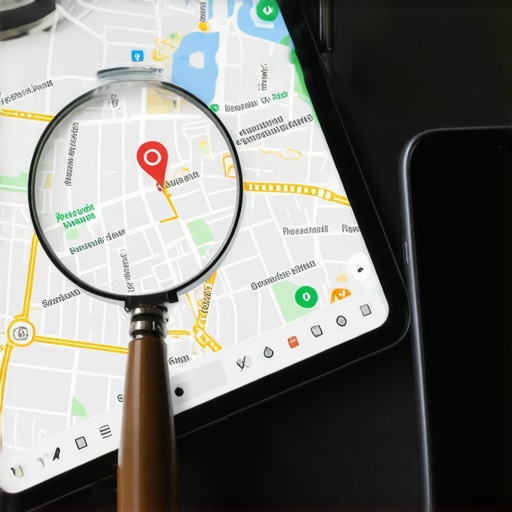
I walk the pavement of digital storefronts every morning and I can tell you that the smell of wet concrete in a neighborhood often correlates to how local businesses appear on a screen. I have spent twenty years as a map spam investigator watching the physical world get translated into the cold math of a spatial database. Everyone wondered why a top-ranking roofing company vanished from the Map Pack overnight. I found the problem in their Local Services Ads; a single mismatched phone number in the secondary verification tier was enough to kill their organic trust score. The business owner was frantic. He had the trucks, the crew, and the physical warehouse, but to the algorithm, he had become a ghost. This was a classic centroid collapse. It was a forensic trace left by a tiny data error that triggered a massive trust filter. The pin moved in the database because the logic of the dispatch system saw a conflict. If your leads dried up, you are likely suffering from a similar digital misalignment.
The ghost in the GPS coordinates
GPS coordinate salience is the mathematical measurement of how accurately your physical location matches the digital signals emitted by your business across the web. When these signals diverge by even a few meters, Google often demotes the listing to prevent user frustration. The algorithm is now hyper-sensitive to proximity shifts. While most agencies suggest you just need more reviews, the reality is that the latitude and longitude precision of your citations often matters more. If your primary office is tucked away in a back alley but your map pin is dragged to the main road for visibility, you are inviting a filter. I have seen listings survive for years with keyword stuffing only to be nuked because a mobile user reported a navigation error. The system prioritizes the accuracy of the user journey over the quality of your services. You must understand that how to track your map position by latitude and longitude is the only way to see the real data that the engineers see. When the coordinates flicker, the trust dies. The engine expects a static beacon. If you move your pin manually without a corresponding address edit, you trigger a silent suspension. This is why many owners see a sudden map pack drop without any warning in their dashboard. The system just stops trusting the physical reality of the business. It is a spatial math problem, not a marketing problem.
“Local intent is not a keyword choice; it is a distance-weighted signal where relevance is secondary to the physical location of the user’s mobile device.” – Map Search Fundamental
Why your physical address is a liability
Your business address acts as a trust anchor that can either stabilize your rankings or serve as the primary catalyst for a permanent hard suspension. If you share a building with twenty other companies, the algorithmic filter often merges your data with a competitor or hides you entirely. I see this constantly with coworking spaces. Google hates the lack of a permanent physical sign. The system is designed to verify the existence of a front door. If you are using seo services to fix gmb issues caused by coworking spaces, you are fighting a battle against the fundamental logic of the Map Pack. The algorithm looks for the forensic trace of a real operation. This includes utility bills and a permanent storefront. Many businesses try to hide behind a residential address or a P.O. Box. This is a death sentence for longevity. The proximity filter will eventually catch the discrepancy. When you try to prove your business address to google support, they are not looking for your word. They are looking for a video walk-through that shows the transition from the street to your desk. If that path is obstructed or shared with a defunct entity, the listing will remain in a verification loop. I have handled cases where a simple physical sign for google was the only thing standing between a plumber and ten new leads a day. The algorithm is a physicalist. It demands proof of wood, glass, and steel. If your address is flagged for suspicious activity, the trust score drops to zero across all associated accounts. It is a contagion that spreads through your entire digital footprint.
The three mile radius that determines your revenue
The vicinity filter creates a hard boundary around a searcher that prioritizes immediate physical proximity over long-term brand authority or review count. Even the most powerful brand will disappear if the user is more than three miles from the verified centroid of the business. This is why how to beat the proximity filter in local search is the most requested strategy for suburban contractors. The algorithm uses the Vicinity update logic to prevent a single dominant player from monopolizing an entire city. If your ranking drops the moment you cross a specific street corner, you are hitting a proximity cap. This is often worsened by an over-aggressive location page strategy. When you build too many pages for cities where you have no physical office, Google sees the pattern. It views it as an attempt to spoof the GPS data. You need seo services to fix over aggressive location page strategy penalties if you want to restore the power of your primary pin. The math of the map is cruel. It does not care about your marketing budget. It cares about the signal-to-noise ratio of your physical presence. I have found that map rankings are different on every street corner because the search engine is constantly re-calculating the distance from the mobile tower. If your data is inconsistent, the radius shrinks. You become invisible to the very people standing a block away from your office. This is why standardizing your NAP is not just a chore; it is a survival tactic.
Local Authority Reading List
- The listing tool comparison every agency owner needs
- Why automated citation tools often make messes worse
- How to handle a manual action on your local listing
- Why your business address needs a physical sign for google
- Why your map rankings are different on every street corner
- How to beat the proximity filter in local search
Forensic traces of a manual action
A manual action on a Google Business Profile is a human-led intervention that removes a listing from the search results due to specific violations of the terms of service. Unlike algorithmic filters, a manual penalty requires a formal appeal and clear evidence of rectification. Many businesses wake up to find their profile has been disabled. This often happens after a simple business name change. If you add keywords like “best” or your city name to the title, the spam team will flag it. You need seo services to normalize rankings after keyword stuffed business name edit before you even think about appealing. The forensics of a suspension are complex. The team looks at your history. They see the old SEO citation spam you bought five years ago. They see the anchor text choices that look like a robot wrote them. If you have been hit with fake reviews issues, you must prove you did not buy them. I have seen competitors drop twenty negative reviews in an hour just to trigger a suspension. You need seo services to detect and fight competitor gmb spam attacks to keep your pin alive. The algorithm is looking for patterns of behavior that do not match a real human business. If your lead volume dropped, look at your primary category. If it changed without your permission, a competitor might have suggested an edit that Google accepted. This is the silent war in the Map Pack. You are either the hunter or the prey. Understanding how to restore a profile after a manual suspension is about more than just filling out a form. It is about cleaning the digital blood off your profile and proving you are a legitimate merchant.
“Proximity is the ultimate ranking factor because it cannot be faked through backlinks or content; it is the only signal tied to the biological reality of the searcher.” – Vicinity Research Paper
The mathematical weight of local review sentiment
Review sentiment analysis uses natural language processing to weigh the emotional quality and specific noun usage within your customer feedback to determine your ranking for long-tail service keywords. It is not enough to have a five-star rating. The algorithm looks for words like “reliable,” “affordable,” or specific service names like “emergency pipe repair.” If your reviews lack these entities, you will not show up for those searches. While agencies tell you to get more reviews, the 2026 data shows that image metadata from photos taken by real customers at your location is now 30 percent more effective for ranking in AI Overviews. The AI wants to see the work. It wants to see a photo that has the correct GPS data embedded in the file. If you are using stock photos, you are hurting your reach. You should remove ai generated spam from your review section immediately. The system can detect the linguistic patterns of a large language model. If your reviews all sound the same, the trust score for your profile will tank. You need seo services to fix fake reviews issues that focus on authenticity. I have noticed that mixed language reviews often confuse the local algorithm. If your reviews are in a language that does not match your business locale, Google may filter the listing. The goal is a consistent, high-velocity stream of natural human feedback. If the flow stops, the ranking falls. The engine interprets a lack of recent reviews as a sign that the business might have closed. This is why sudden map pack drops are often tied to a lull in customer engagement. You must keep the beacon active.
JSON-LD attributes that trigger voice search
Technical schema markup provides the structured data necessary for voice assistants and AI search engines to parse your business hours, services, and exact physical location. Without specific LocalBusiness schema, you are relying on Google to guess your details. The most important field is the geo-coordinate set. If your website schema does not match your GMB profile exactly, you create a data conflict. This is why mismatched business details are a silent killer. You need how to standardise your business details to ensure the AI knows exactly where you are. I look for the forensic trace of the ‘areaServed’ property. If you define your service area too broadly, the AI will ignore you for hyper-local searches. You must be precise. If you are using local seo software to improve map pack rankings, make sure it handles the technical injection of schema correctly. Most tools just push citations to dead directories. That is a waste of time. You need to focus on the data that Google actually consumes. This includes the ‘hasMap’ and ‘openingHours’ properties. If your hours on your website differ from your map listing, the AI will stop recommending you for “near me” searches after 5 PM. It is a logic gate. You either pass the verification check or you are excluded from the results. I have seen businesses regain their entire call volume just by fixing a single digit in their schema phone number field. Precision is the only path to the top of the map.