
Tracking Your GMB Success: The Only Metrics That Matter
I spent three months fighting a hard suspension for a plumbing client whose listing was nuked simply because they shared a suite number with a defunct law firm. Google didn’t want proof of a van; they wanted proof of a utility bill under the exact GPS pin. This is the reality of the local search layer. It is a world of rigid math and cold logistics. If your paperwork does not match the coordinate data, you do not exist. As a logistics manager of search data, I view every business listing as a proximity beacon. When that beacon fails, the entire dispatch system of Google Maps breaks down. You are not just managing a profile. You are managing a spatial asset in a database that values physical proof over marketing fluff. Tracking success requires a forensic eye. You have to look past the vanity metrics of views and impressions. You must hunt for the signals that translate into actual revenue and service bookings.
The mathematics of the map pin
Tracking GMB success requires moving beyond simple view counts. True performance is measured by phone calls, direction requests, and the specific geographic proximity of the searcher. You must analyze these data points against your local centroid to identify ranking gaps in high value service areas where your competition is currently winning.
When we talk about the local search ecosystem, we are talking about a grid. Google evaluates your business based on the distance between the searcher and your verified address. This is the vicinity algorithm at work. If you are tracking your rankings from a single point, you are failing. Real success is measured by how your visibility holds up as the user moves away from your storefront. You need to see the grid. You need to know if you drop from position one to position ten just two blocks away. This is where tracking local rank fluctuations down to the mile becomes your primary diagnostic tool. Without this granular data, you are flying blind. You might see a high volume of impressions, but if those impressions are happening in a graveyard where nobody buys, they are worthless. We look for the density of the signal. We look for the heat map of engagement. A successful profile shows a wide radius of influence. It shows that Google trusts your business enough to show it to users who are five or ten miles away. This trust is earned through data consistency and behavioral signals. If your ranking disappears at the three mile mark, your logistics are flawed.
“Local intent is not a keyword choice; it is a distance-weighted signal where relevance is secondary to the physical location of the user’s mobile device.” – Map Search Fundamental
Why your physical address is a liability
Physical locations can become liabilities if they are improperly verified or shared with defunct entities. A mismatched address in a secondary directory can trigger a quality suspension. Success is defined by keeping your address data clean across all fifty primary and secondary data aggregators to maintain high authority.
The logistics of an address are complicated. Google uses a process called triangulation. It compares your Google Business Profile data against the rest of the web. If your old office address is still floating around on a random directory from five years ago, it creates friction. Friction leads to ranking drops. I have seen businesses lose thirty percent of their call volume because of a single mismatched phone number on a local chamber of commerce site. This is why fixing the nap mess is a non-negotiable step in any audit. You have to scrub the web. You have to remove the ghosts of former locations. This is especially true for businesses that have moved. Google’s memory is long. If you don’t actively manage your citation profile, you will find that your old office address is still outranking your new one. It is a logistical nightmare. It requires manual intervention. Automated tools often miss the nuances of a suite number or a directional suffix like North versus South. You need a human eye to ensure that the data fed into the algorithm is perfect. Clean data is the fuel for the ranking engine.
Local Authority Reading List
- The Local SEO Checklist for Dominating High Value Map Searches
- How to Clean Up Citation Data That Is Haunting Your Map Ranking
- 7 Metrics That Prove Your Map Strategy Is Generating Calls
- The Specific Category Tweaks That Doubled Our Phone Calls
- The Only Tools We Use to Manage and Scale GMB Listings
The three mile radius that determines your revenue
The vicinity algorithm restricts your visibility based on the user’s distance from your office. If you are not appearing in the top three results within a three mile radius, your profile lacks the necessary geographic authority. You need local SEO software to improve map pack rankings across specific grids.
Proximity is a heavy weight. In the current algorithm, distance often trumps relevance. You could be the best plumber in the city, but if the user is five miles away and there is a mediocre plumber two blocks away, Google will show the mediocre one first. This is the reality of the map pack. To fight this, you have to optimize for behavioral zooming. You need to prove to Google that people are willing to travel to you or that you are active in their specific neighborhood. This is where engagement metrics that matter more than reviews come into play. Are people clicking the call button? Are they requesting directions and actually arriving? Google tracks the GPS of the phone. If a hundred people request directions to your business but their phones never actually move toward your address, Google knows those are fake signals. It knows you are trying to game the system. Success is a real world metric. It is about the flow of human traffic. We use tools to see your business ranking on every street corner to visualize this. If we see a dead zone, we investigate the local citations and the website content for that specific neighborhood. We build local relevance through geographic content that mirrors the path of your service vans.
The forensic trace of a service area polygon
Service area businesses must define their reach through precise polygons rather than broad circles to avoid triggering spam filters. Success for these listings is measured by the ability to maintain visibility without a physical storefront. You must use specific category tweaks to maximize your reach within your service zones.
For many of my clients, the office is just a place to park the trucks. They don’t want customers coming to their home. This creates a unique challenge. When you hide your address, you lose a significant amount of geographic weight. Google becomes suspicious. They want to know exactly where your service area ends. If you set your radius too wide, you look like a spammer. If you set it too narrow, you lose leads. The key is to match your service area in the GMB dashboard with the actual data on your website. You need to mention the specific neighborhoods, zip codes, and landmarks that define your route. This is about how to match your website content to local search intent. When the algorithm sees that your site talks about the same streets where you claim to work, the trust score rises. If you are struggling with a sudden drop in leads, it might be because your map rank dropped after you hid your business address. It is a common penalty. We fix this by reinforcing the local signals through clean backlinks and localized landing pages. We don’t use generic content. We use data that reflects the logistics of your daily operations.
“Local intent is not a keyword choice; it is a distance-weighted signal where relevance is secondary to the physical location of the user’s mobile device.” – Map Search Fundamental
The hidden cost of keyword stuffed business names
Using keyword stuffed business names is a high risk strategy that often leads to hard suspensions and loss of local authority. Success is achieving high rankings through legitimate SEO consulting services for complex penalty cases rather than through TOS violations. You must prioritize long term stability over short term ranking gains.
I see it every day. A business owner changes their name to Best NYC Plumber hoping to skip the line. It works for a week. Then the listing vanishes. The spam team at Google is more active than ever. They are looking for businesses that do not match their legal registration. If you have been caught in this trap, you need local seo services to normalize rankings after keyword stuffed business name edit. You have to revert to your real name and rebuild your authority from scratch. It is a slow process. You have to prove to Google that you are a legitimate entity again. This involves submitting business licenses, utility bills, and even video proof of your signage. If you are currently suspended, you should read what really happens when you appeal a profile suspension. It is not an automated process. A human reviewer will look at your data. If they see a pattern of deception, they will deny your appeal. Success in the local pack is about longevity. It is about building a profile that can withstand an audit. We focus on why clean backlinks matter more for maps than for general search. These links act as digital character references. They tell Google that other local entities trust you.
The logic of a check in signal
Check in signals and customer uploaded photos are the new currency of local SEO authority in 2026. These metrics prove real world interaction and physical presence at the verified location. You should encourage customers to upload photos with active GPS metadata to strengthen your proximity signals and improve visibility.
The algorithm has evolved beyond text. It now looks at the metadata of the images uploaded to your profile. When a customer takes a photo at your business, their phone attaches a GPS coordinate to that file. When they upload it to your GMB, Google sees that coordinate. It confirms that the customer was actually there. This is a massive trust signal. It is much harder to fake than a text review. In fact, specific review phrases that force google to rank your profile higher are often most effective when paired with a photo. I tell my clients to stop worrying about the number of reviews and start worrying about the quality of the interactions. One photo from a local guide with a high trust score is worth fifty five star reviews from new accounts. This is the logistics of reputation. You need to manage the flow of content. You need to ensure that your profile is updated regularly with real world evidence. If your profile is static, it looks abandoned. An abandoned profile is a low priority for the algorithm. We use the specific toolkit for boosting map engagement in 30 days to jumpstart this process. We focus on real world signals that are impossible to ignore.
The forensic audit of a ranking collapse
A sudden ranking collapse is usually the result of a data mismatch or a manual penalty triggered by suspicious activity. You must perform a deep audit of your secondary citations and backlink profile to identify the root cause. Use emergency seo services for sudden ranking drop to restore your visibility.
When a business vanishes from the map pack overnight, it is rarely an accident. It is usually a red flag in the system. Perhaps your site was hacked, or a competitor launched a negative SEO campaign against you. I have seen cases where services to repair hacked or infected website for seo were the only way to get a GMB listing back on the map. If your site is spreading malware, Google will de-index you immediately to protect users. This includes your local listing. You have to move fast. You need to debug your ranking drop by looking at your search console and your profile health. Is there a new owner? Did a secondary manager make an unauthorized change? Tracking these changes is vital. I recommend how to monitor gmb changes without spending all day online so you can catch issues before they become catastrophes. A successful map strategy is proactive. It anticipates the glitches in the system. It treats every ranking as a temporary state that must be defended through constant monitoring and data verification.
Why agency grade tools are worth the investment
Standard rank trackers often provide false hope by using outdated or non-localized data points that do not reflect reality. You must use agency grade software that tracks proximity across a dense grid to see your true performance. This investment allows you to outrank national competitors using better local data.
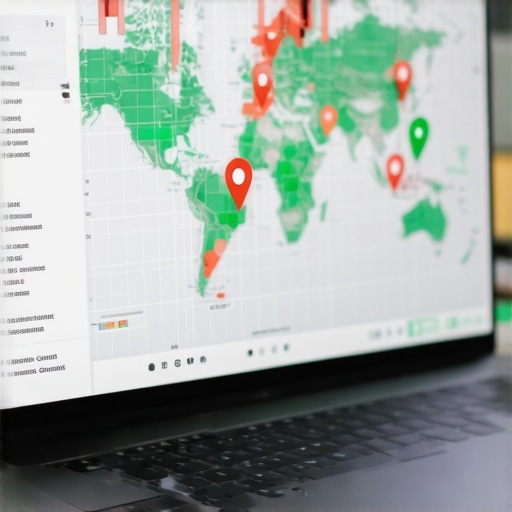
I have no patience for cheap software. If you are using a free tool that only checks your rank once a week from a single zip code, you are wasting your time. You need to see the movement. You need to know why most local seo tools fail to track proximity correctly so you can avoid their traps. The best tools provide a grid view. They show you a map of the city with dozens of pins, each representing a ranking from a specific coordinate. This is the only way to see the impact of the vicinity algorithm. It shows you exactly where your authority ends. This data allows you to make strategic decisions. If you see that you rank well in the North but poorly in the South, you can shift your content strategy to target the South. You can focus on stealing local leads from national competitors by being more relevant on a street by street level. Success is a game of inches. It is about winning the corner, then the block, then the neighborhood. It is a logistical expansion. You need the right instruments to measure your progress. Without them, you are just guessing. And in the local search layer, guessing is a recipe for failure.